
How to combine necklaces, rings and bracelets with style
You do not need a complete matching set to combine jewellery. Explore colours, motifs and proportions, then try three looks built around six stainless steel designs.
How can you combine a necklace, ring and bracelet without feeling overdone? Start with a detail you like and build around it. Colour, motif or texture can connect different pieces. Aim for an ensemble you enjoy wearing, rather than a compulsory styling formula.
Wear one piece, two categories or a fuller selection. The same jewellery changes with your neckline, sleeves and chosen proportions. Here is a method for experimenting, six catalogue examples and three outfit ideas to adapt to your wardrobe and comfort.
Start with the outfit and a focal point
Look at the space your clothing leaves
Notice the neckline, wrists and existing clothing details before adding jewellery. An open neckline may leave room for a pendant; long sleeves change bracelet visibility. You need not fill every space: leaving one area simple can make another piece easier to appreciate.
Shiny buttons, embroidery and prints also contribute. With detailed clothing, start with a few pieces and decide what you want to highlight. For pendant length, our guide to choosing a necklace for your neckline and outfit offers additional ideas.
Choose the piece that sets the direction
Start with a figurative ring, flower bracelet or understated necklace. Place other pieces nearby and consider what each adds: colour, contrasting texture or another focal area. Changing the starting piece lets you vary an existing collection without replacing everything.
If a ring already draws attention, a simpler necklace can give it space. For a fuller look, keep a visible connection such as rounded shapes. These are suggestions, not a requirement to limit every outfit to one statement piece.
Check the combination in movement
Look at the entire outfit, then sit, bend your wrist and move your hands. A pretty flat lay may catch a sleeve, keyboard or bag. If something pulls, snags or repeatedly strikes another piece, adjust the combination rather than judging appearance alone.
Comfort cannot be inferred from the material name. Consider measurements, stated weight, clasps and adjustment for each design. An adjustable ring is not universal, and a fine chain is not suitable for every activity. How you wear the pieces matters as much as visual harmony.
Connect colours, motifs and proportions
This table offers starting points, not compulsory combinations or absolute prohibitions. Try one idea, observe it on yourself and adjust the number of pieces. A carefully chosen repeated detail can be enough to create coherence.
| Starting point | Combination to try | Detail to check |
|---|---|---|
| Dominant colour | Two related pieces and a different accent | Distribution of tones |
| Distinctive motif | Simpler lines around the motif | Space around the design |
| Texture | A smooth piece with subtle relief | Rubbing between surfaces |
| Several necklaces | Distinct positions | Contact, clasps and movement |
| Dressed wrist | A quieter ring or earrings | Sleeves and watch comfort |
Repeat a colour without demanding a matching set
A gold-coloured necklace and ring can echo each other with different designs. White or black details can also connect pieces. A visual resemblance does not establish identical materials: a white pearl and pearly-looking pendant are not necessarily made from the same substance.
Mix gold and silver colours if you like contrast
Try a dominant tone with a touch of the other, then reverse the balance if preferred. A ring, bracelet or earrings can supply the contrast. Our guide to choosing gold-coloured or silver-coloured jewellery explores these choices; colour remains separate from stated composition.
Vary proportions so details remain visible
Pair a broader piece with finer lines, or combine small pieces for more presence. Check actual measurements and space between motifs. Isolated product photographs cannot directly establish relative size: read available dimensions and consider how the pieces sit on you.
Layer without multiplying contact
Position necklaces so pendants remain visible, then test movement. Stated lengths and extensions help, without ensuring identical spacing on everyone. If chains twist together or decorations collide, reduce the selection. No arrangement guarantees that tangles and friction will never occur.
Six designs for your own combinations
These Saze Diffusion pieces are described as stainless steel. Suggestions concern appearance and design, without precious-metal claims. Check current descriptions and availability. Gold colour, silver colour and pearly appearance must not be interpreted as solid gold, sterling silver or natural mother-of-pearl.
Drop necklace 50980723 as a central line
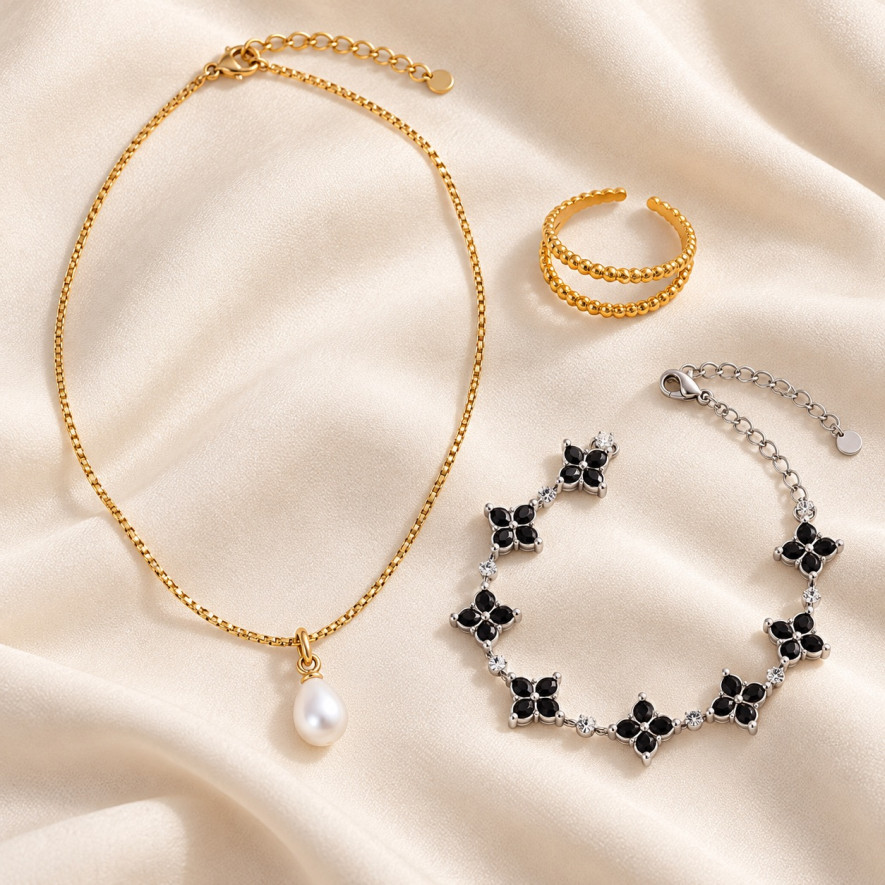
The gold-coloured pearly-look drop necklace 50980723 combines a fine chain and white drop. Use it to begin a restrained ensemble or echo its light detail with earrings. Check length and extension so the pendant sits appropriately beside your neckline.
Double-wire ring 11324925-2 for texture
The double twisted-wire ring 11324925-2 adds two slightly separated gold-coloured lines. It can accompany the drop necklace without repeating its motif. Leave room if adding another ring. Adjustable sizing still requires a comfortable fit and gentle handling.
Pearl studs 11137538-2 for a bright touch
The gold-coloured pearl studs 11137538-2 have round white forms and stainless steel posts. They can echo the pendant’s brightness without becoming an identical set. The pearls’ exact nature is not specified here. Compare dimensions, fastening and comfort, especially for several hours of wear.
Black flower bracelet 55183396 as a graphic accent
The silver-coloured black flower and clear rhinestone bracelet 55183396 can lead the wrist styling. Its black-and-silver contrast helps select simpler accompanying pieces. Before wearing it beside a watch or another bracelet, check space and avoid repeated impacts on decorations.
Fluted hoops 11597324-2 for texture near the face
The silver-coloured fluted hoops 11597324-2 have broad rings and textured surfaces. Beside a patterned bracelet, they repeat colour rather than the exact motif. If it feels too busy, try removing the necklace. Measurements and fastening still matter beyond visual compatibility.
Snake ring 11335313-1 as the main motif
The gold-coloured coiled snake ring 11335313-1 attracts attention through its open silhouette and scales. Pair it with a simple necklace or let it stand alone on the hand. Keep ring motifs visible and avoid uncomfortable contact. Adjustable does not guarantee every size.
Three looks to adapt
A soft combination with simple clothing
Try the drop necklace, pearl studs and double-wire ring with a plain top or shirt. Gold colours and white details connect them without implying identical decorative materials. Begin with two pieces and add the third if you like it. Changing sleeves or neckline may alter the balance.
Black and silver contrast for a graphic outfit
Pair the black flower bracelet and fluted hoops with restrained clothing, then decide whether a necklace adds anything. Black decoration can echo a garment or accessory without repeating floral motifs. Our guide to choosing women’s bracelets compares shapes and fastenings for different uses.
A statement piece with mixed tones
Start with the snake ring and, if you enjoy the contrast, add a quieter silver-coloured piece from your collection. Assess colours with the entire outfit. You may prefer a dressed hand and bare wrist. There is no requirement to distribute equal amounts of gold and silver colour.
Protect the pieces and keep the routine simple
Separate pieces that collide
Layering should not create constant rubbing. If rings knock together or a bracelet continually touches a watch, space them out or change the combination. Put pieces down separately after removal. This also makes the next styling experiment easier without untangling the whole selection.
Care for the complete piece
Finishes, pearls, rhinestones and attachments can need different precautions from the base metal. Follow product instructions and our stainless steel jewellery care guide. The metal name alone promises neither absolute durability nor suitability for swimming. Styling does not change each design’s care requirements.
Frequently asked styling questions
Must necklace, ring and bracelet be worn together?
No. Start with two categories or one piece. Add something only if you enjoy it with the outfit and it remains comfortable. There is no universally correct number or obligation to fill every area.
Can gold and silver colours be mixed?
Yes, if you like the contrast. One dominant colour and an accent offer a starting point, but no proportion is compulsory. Check materials and finishes separately: a colour name does not describe the whole composition.
How can I stop layered necklaces tangling?
Try distinct positions, check clasps and observe the chains in movement. If they constantly cross, simplify. Different lengths do not guarantee freedom from knots; fine chains and pendants can move throughout the day.
Can different motifs be combined?
Connect different motifs with colour or let one design stand out. Start with few pieces and consider what each addition contributes. If you prefer abundance, prioritise comfort and the details you actually want to show.
How should I adapt a combination for work?
Consider actual tasks, sleeves and workplace requirements. A bracelet that interferes may be replaced with a suitable ring or earrings. Where jewellery must be removed, respect that instruction rather than looking for a purely aesthetic compromise.
A five-step method for future combinations
Choose an outfit, a first piece and a visual connection. Add gradually, check the combination in movement and remove what feels uncomfortable or distracts from your favourite detail. This creates personal combinations from existing jewellery without requiring a complete new set each time.
- Observe neckline, sleeves and clothing details.
- Choose the piece or motif that sets the direction.
- Connect others through colour, shape or texture.
- Check measurements, adjustments, fastenings and moving contact.
- Adjust the number of pieces to your comfort and preference.
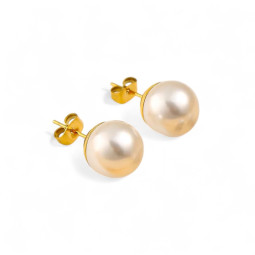
Gold Pearl Stud Earrings 11137538-2
Gold-tone stainless steel stud earrings set with a large round white pearl. Timeless, elegant and easy to wear.
Price €1.68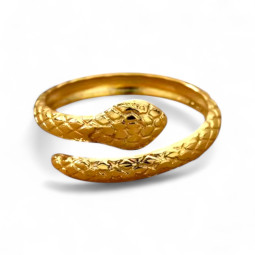
Gold Coiled Snake Ring 11335313-1
Open gold-tone stainless steel ring shaped like a snake coiling around the finger, with a scale-textured body and a finely detailed head.
Price €1.92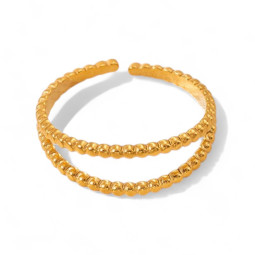
Gold Double Twisted Wire Ring 11324925-2
Slim open gold-tone stainless steel ring made of two parallel twisted bands, set slightly apart.
Price €2.52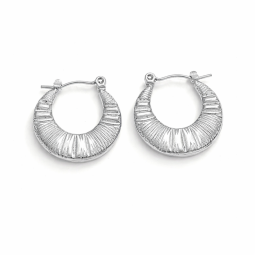
Silver Wide Fluted Hoop Earrings 11597324-2
Wide hoops in silver-tone stainless steel carved with irregular vertical flutes. Textured, sculptural and easy to wear.
Price €1.80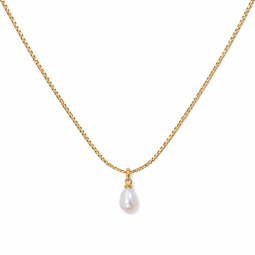
Gold-tone necklace with a pearlescent drop pendant 50980723
A small white pearlescent-look drop finishes this fine gold-tone stainless steel necklace with a lobster clasp and extension chain.
Price €4.68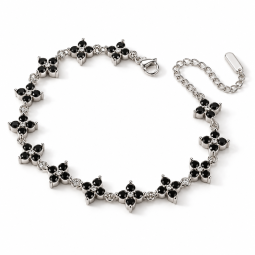

Silver-tone bracelet with black flowers and light rhinestones...
Silver-tone stainless steel bracelet combining black four-petal flowers with small sparkling light details between and within the motifs.
Price €8.28
Leave a comment