
Does stainless steel jewellery turn black or lose its colour?
Understand deposits, dullness and finish wear so you can assess changes in stainless steel jewellery without using unsuitable treatments.
A gold-tone bracelet that looks less bright, a dark mark beside a clasp or a necklace whose shade seems different do not necessarily have the same explanation. To understand whether stainless steel jewellery turns black, separate the metal forming the piece, any decorative finish and anything deposited on its surface. Making that distinction helps you choose a suitable first step, instead of damaging a delicate decoration while trying to restore its original appearance.
Stainless steel has good corrosion resistance, but that does not make every finished piece unalterable. A chain, attachment, decorative crystal and gold-tone surface may need different consideration. This guide explains how to observe an appearance change, assess the limits of commercial claims and establish a reasonable care routine. Catalogue examples show how to read actual specifications; they do not promise a guaranteed lifespan or an identical result for every wearer and every situation.
Why stainless steel resists corrosion
Protection associated with the metal itself
Stainless steel owes its resistance partly to a thin chromium-rich passive layer that forms on its surface. Worldstainless explains the principle in its overview of corrosion resistance. This protection helps distinguish stainless steel from other metals. However, it should not be confused with a gold-tone decorative finish: the passive layer on the base metal and a surface treatment on a finished piece have different functions and should be assessed separately when reading a product description.
Resistant does not mean unaffected by everything
The environment, surface condition and construction also matter. A promise that treats all stainless steel jewellery as indestructible overlooks those differences. Equally, a slight reduction in shine does not establish that the metal is poor quality. Look first at the affected area, what changed in your routine and the manufacturer's instructions. An observation about one part of a necklace should not become an unsupported conclusion about the composition or condition of the whole piece.
Jewellery can contain several different elements
A description may specify a stainless steel base while showing white decoration, decorative crystals or coloured elements. Those parts deserve their own attention. The word “steel” does not automatically describe every visible component or explain how it is attached. For a composite design, read the available details and ask a question if the decorative material matters to your purchase. A bright photograph can help you understand the style, but cannot supply missing information about materials and assembly.
Blackening, dullness and colour change: understanding the differences
Deposits can temporarily hide the shine
Residues from creams, soap or cosmetics can leave a visible film on jewellery. The appearance may then seem duller, particularly in recesses and around a fastening. This is something to consider, rather than a reliable diagnosis from a photograph. Remove the piece, examine it in soft light and read its care instructions. Avoid immediately trying several cleaning products to recreate the brightness you remember from an older picture taken in different lighting conditions.
A gold-tone finish can change separately from its base
A gold-coloured stainless steel piece is not automatically made of gold. Its decorative finish may change with use and repeated friction. A lighter patch where it touches another item may therefore concern the surface rather than the underlying metal. Without knowing the treatment used on the specific model, you cannot state its exact resistance or identify it as PVD or gold plating simply from its colour. Ask for product-specific information when that distinction matters to you.
Scratches change the way light is reflected
A piece can look less shiny because its surface is marked, without becoming uniformly black. Examine areas that frequently touch a table, watch or neighbouring rings separately. Compare the same part under similar lighting, instead of comparing two photographs with opposite lighting conditions. Do not try to remove a mark with an abrasive powder or paste. Rubbing harder may change the finish and soften a textured detail while leaving you uncertain about what caused the original appearance change.
Persistent alteration needs a closer check
If a mark remains after appropriate care, a surface flakes or a fastening appears damaged, contact the seller with the reference and clear photographs. Different causes can produce a similar appearance. A precise assessment is more useful than a household recipe intended for another metal. Keep the original description and care instructions as well: they show what was specified and help you ask a question about this exact model, rather than jewellery materials in general.
Examine your jewellery before intervening
Identify where and when the change appeared
Place the piece on a light background and look at the whole design before examining the affected detail. Is the change in a recess, on an exposed surface or beside an attachment? Did you notice it after loose storage, a splash or a change in wearing habits? Record what you observed without deciding on the cause too quickly. This brief description helps customer service and avoids applying a treatment to the whole piece when only one area needs assessment.
Choose a gentle first step
Where the product instructions allow it, a clean, soft cloth is a straightforward starting point. Work without excessive pressure and avoid catching decorative settings. If the design has a delicate decoration or its care instructions are unclear, ask before wetting it or using a product. Cleaning baths advertised as universal do not suit every combination of materials. A cautious first intervention also preserves useful evidence if you subsequently need the seller's help to understand a persistent problem.
| Appearance observed | What to examine | First response | What to avoid |
|---|---|---|---|
| General dullness | A possible surface film | Read the care guidance and use an approved cloth | Adding several products in succession |
| A lighter gold-tone area | Points of repeated contact | Photograph it and check the stated finish | Strong polishing to even out the colour |
| A mark inside a texture | A deposit or another possible alteration | Observe without scraping | Using a metal point |
| White decoration looks duller | Its material and attachment | Ask for a suitable method | Applying a silver-cleaning product |
| A damaged fastening | Its function and integrity | Stop wearing it and contact the seller | Forcing the closure |
Keep a reliable comparison
A photograph taken on arrival can be a useful reference if it represents the colour faithfully. For a later comparison, use a similar background and light without filters that make the image warmer or cooler. Photograph the clasp and identifying details too. The aim is not to monitor every reflection, but to keep clear information if an unusual change appears. An exact reference and two readable pictures are more helpful than a general statement that the jewellery looks “different”.
Protect the finish during everyday use
Put jewellery on after using cosmetics
An easy routine is to finish getting ready before putting on your jewellery. Let products applied to skin or hair dry as directed, then choose your necklace and bracelets. Avoid spraying products directly onto pieces you are wearing. This does not promise a specific lifespan, but reduces unnecessary splashes. It is especially easy to adopt for jewellery near the neck, wrists and other areas where you regularly apply perfume or cream as part of your normal preparation.
Reduce repeated contact between pieces
Layered bracelets can make an attractive composition, but each piece may touch the others. Look at contact with a watch, the edge of a bangle or raised decorative elements. If surfaces constantly knock together, change their spacing or wear some items separately. The same reasoning applies to neighbouring rings. Comfort and protection of the finish matter alongside the effect in a still photograph, where repeated contact and movement are not always obvious to the viewer.
Match the piece to the activity
Remove jewellery before activities exposing it to products, impacts or pulling that are unsuitable for its construction. A thin ring, chain and decorated pendant do not have identical vulnerable points. For questions about showers, pools and bathing, consult our guide to caring for stainless steel jewellery together with the model's own instructions. Do not interpret “stainless” as general permission for every activity, every cleaning method or every environment you may encounter while wearing the finished piece.
Store each item without tension
A clean, separate space reduces contact between pieces. Put chains down without pulling on clasps, and keep decorated parts from sliding beneath heavy objects. If you use pouches, check that several loose chains are not gathered in one compartment. Storage that is pleasant and easy to use also encourages consistency: you can find a piece ready to wear without starting the day by untangling it or forcing a fastening to make a rushed adjustment.
Six catalogue examples that help you read specifications
A pendant whose decoration needs separate attention
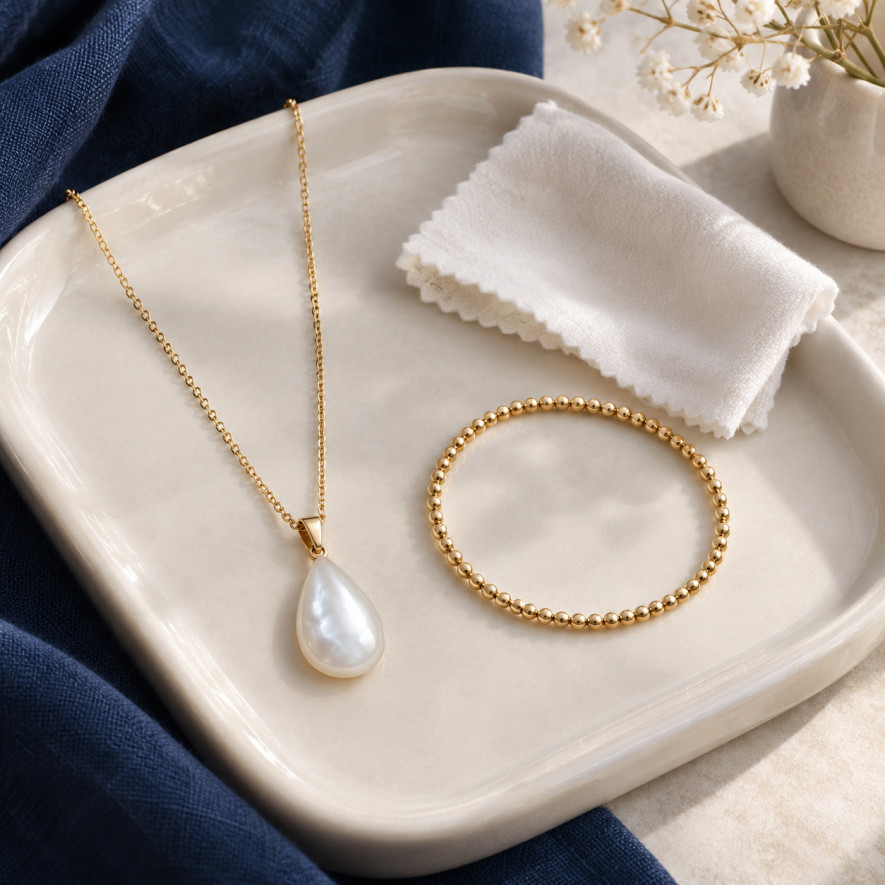
The pearlescent drop pendant necklace 50980723 combines gold-tone stainless steel with a white drop described as pearlescent in appearance. The listing gives 39 cm plus a 5 cm extension and advises avoiding sprays and repeated rubbing during storage. “Pearlescent” describes an appearance; it does not establish natural mother-of-pearl. This example shows why the decorative effect and the stated finish should be read separately from the principal material when you compare products or select a care method.
A textured ring to protect from friction
The double twisted-wire ring 11324925-2 has two textured gold-tone lines on an open band. Its relief contributes to its visual effect. The description mentions adjustment, without promising a universal size range or unlimited resistance to repeated bending. When looking at the surface, compare exposed areas and recesses without inserting a hard object. An accurate description lets you appreciate the design while avoiding assumptions about a special property or treatment that the product information does not state.
A fine bracelet whose length is a practical consideration
The fine gold-tone bead bracelet 11138909 is listed at 16 cm with a 5 cm extension. Its care guidance advises avoiding perfume, creams and household products and storing it separately. Those details are more useful than a broad claim that jewellery needs no care. Check the fit too: a chain you repeatedly pull to reposition is not being used in the same way as a piece whose dimensions comfortably suit your wrist and normal movements.
Decorative crystals as separate elements
The fine three-rhinestone bracelet 10201217 features three sparkling details on a 17 cm chain with a 5 cm extension. Stainless steel is the stated main material; the rhinestones introduce another type of surface. Do not automatically apply a metal-cleaning method to every decorative element. Dimensions and construction help you choose suitable use, without describing these details as diamonds or interpreting them as a guarantee of a particular lifespan, attachment method or resistance to every daily activity.
Hoops whose relief changes the appearance of shine
The small gold-tone ball hoop earrings 10969603-12 measure 1.8 cm and are sold as a pair. Closely spaced spheres create several reflections and shadowed areas between the raised details. A shadow in a picture does not necessarily indicate a stain. Examine the actual piece in diffused light before intervening. Its compact size does not permit every use either: it does not remove the need for suitable storage or for taking jewellery off during activities that could expose it to damage.
Two chains to keep separate and readable in storage
The double-layer heart and star necklace 52305252 has listed lengths of 40 and 45 cm with a 5 cm extension. Its description distinguishes the decorative drop from the two chains, which share a closure. Store the chains flat, separate from other jewellery, to keep the composition organised. This precaution concerns the construction of the piece rather than only the corrosion resistance of its metal, and it does not imply any particular unstated gold-colouring or plating process.
What to check before ordering
Ask for specifications instead of a magical lifespan
Look for the material, stated finish, measurements and care instructions when choosing. If you need additional information about a surface treatment, ask about the exact reference. A lifespan stated without conditions does not describe your future use. Wearing frequency, contact and storage vary between people. It is therefore better to compare documented details than promises of permanent shine or complete freedom from wear, particularly if your intended activities differ from the examples shown in a product photograph.
Compare designs with consistent expectations
Choosing a fine piece or a more substantial design also involves construction and the way you intend to wear it. Browse the stainless steel jewellery catalogue with a short list of useful criteria. For colour preferences, our guide to choosing gold-tone or silver-tone jewellery offers styling ideas. However, an aesthetic preference should not become an automatic conclusion about the nature of a metal or treatment. Keep appearance, construction and documented composition as separate parts of your comparison.
Frequently asked questions about stainless steel jewellery colour
Can stainless steel jewellery become dull?
Yes, its appearance can change, including through deposits or surface marks. That observation alone does not identify the cause. Read the care instructions, examine the affected areas and begin with the gentlest step approved for the model. If the alteration persists or affects a fastening, ask the seller rather than trying a mixture of cleaning products or rubbing harder.
Does the gold colour always last the same length of time?
You cannot state an identical lifespan for every gold-tone design. The documented finish, construction and conditions of use need consideration where known. Colour alone does not identify gold plating or a specific process. If you have a particular expectation about wearing frequency or treatment, ask for information about the reference you are actually planning to buy.
Can I use toothpaste to make it shine?
Do not treat that as an automatic cleaning method. An abrasive product can change a finish and affect decorations. Use a method compatible with the piece's own instructions. If you do not know what a white or sparkling element is made from, ask before rubbing, soaking or treating the whole piece as though it contained only one material.
Does a dark mark prove that the piece is not stainless steel?
No, one visual observation is not a composition analysis. A mark, deposit, photographic shadow and lasting alteration can look similar on screen. Keep the reference, listing and readable photographs. The seller can clarify the stated specifications and assess your question without relying only on a general description or a photograph taken under strongly coloured lighting.
What if the colour changes soon after purchase?
Document the change and contact the seller before using an aggressive treatment. Give the arrival date, wearing circumstances and affected area. A whole-piece photograph and a detail in soft light are helpful. Describe what you can see without assuming the cause, so you can ask for a response appropriate to the model and the conditions applying to your order.
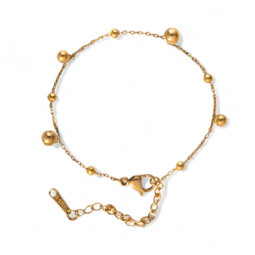
Gold Fine Chain Bead Bracelet 11138909
Fine gold-tone stainless steel chain bracelet dotted with polished beads of two sizes. Light and feminine.
Price €3.54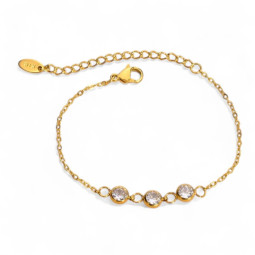
Gold Fine Three Rhinestone Bracelet 10201217
Fine gold-tone stainless steel chain bracelet with three bezel-set round rhinestones. Delicate and bright.
Price €5.04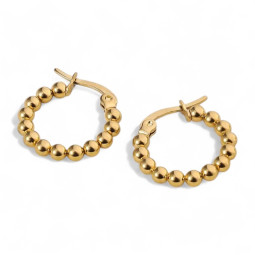
Gold Small Ball Hoop Earrings 10969603-12
Small gold-tone stainless steel hoops made of large, tightly packed beads. A mini size full of relief.
Price €3.00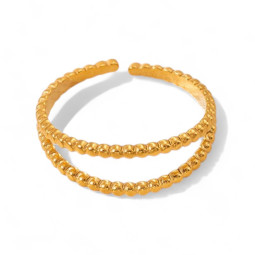
Gold Double Twisted Wire Ring 11324925-2
Slim open gold-tone stainless steel ring made of two parallel twisted bands, set slightly apart.
Price €2.52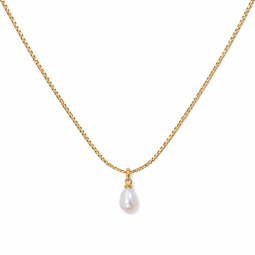
Gold-tone necklace with a pearlescent drop pendant 50980723
A small white pearlescent-look drop finishes this fine gold-tone stainless steel necklace with a lobster clasp and extension chain.
Price €4.68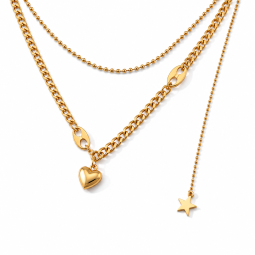

Gold-tone double-layer heart and star necklace 52305252
Two gold-tone chains, a smooth heart and a hanging star create this double-layer stainless steel necklace.
Price €5.28
Leave a comment