
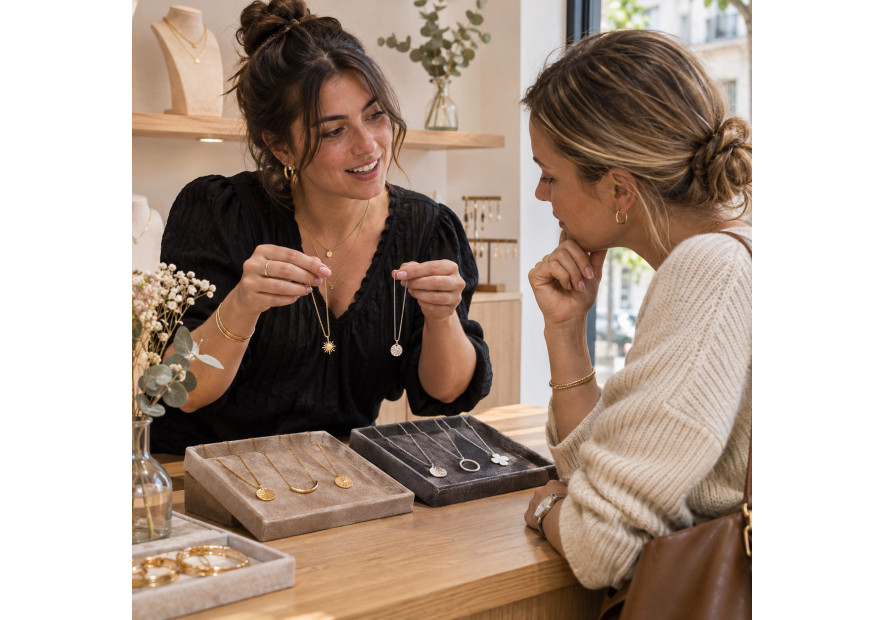
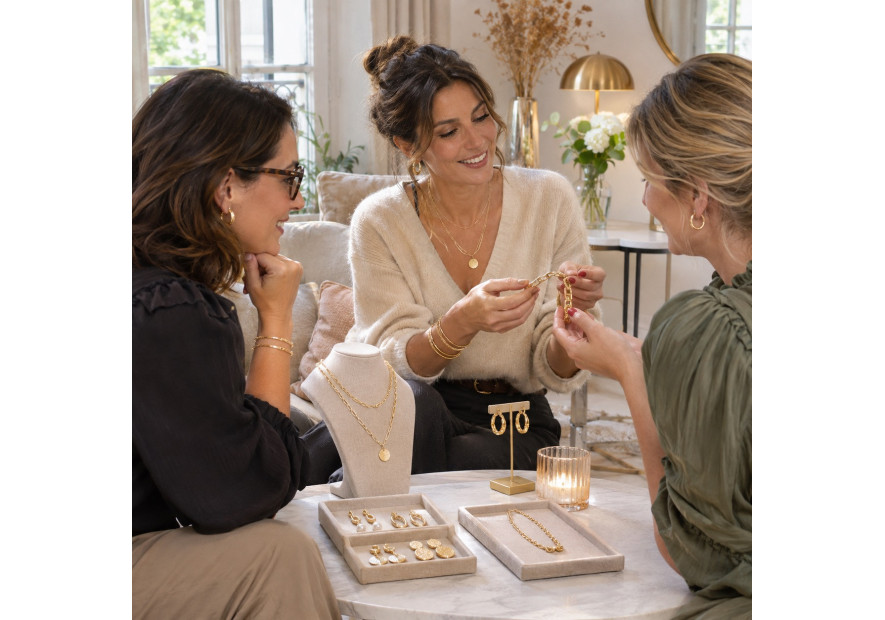
How to host your first jewellery party at home
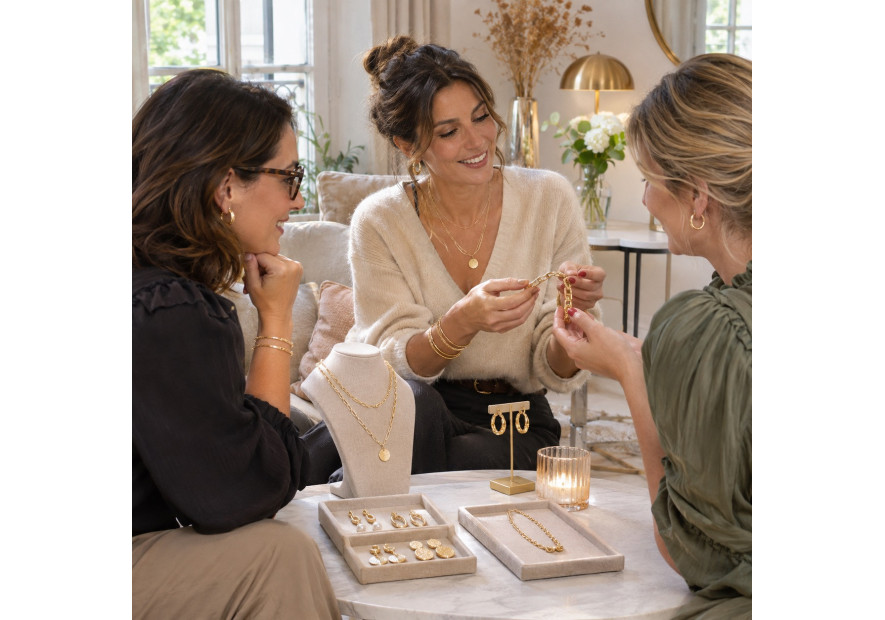
Plan your first jewellery party at home, from choosing the range and inviting guests to taking orders and reviewing how it went.
A well-prepared table, a few interested guests and a selection that is easy to understand can be enough for your first jewellery presentation at home. This format lets you show the details, answer questions and give everyone time to compare the designs at their own pace. It takes more than an attractive collection, though: invitations, pricing, orders and follow-up all need to work together.
If you want to sell jewellery at home, start by planning an event that is straightforward and measurable. You do not need to turn your sitting room into a complete shop. The important things are deciding what guests will see, how they can place an order and what happens after a purchase. This guide sets out a practical way to plan your first private jewellery event, with checks you can use at your next one.
Choose the format for your first private event
Decide between individual appointments and a small group
An individual appointment gives you time to focus on one person. A small group encourages conversation, but you need to answer questions without leaving everyone else waiting. Choose a format that suits your space and availability, rather than inviting the largest number of people you could possibly fit in.
For a first attempt, a set time slot makes planning easier. Give guests a clear start and finish time. If they can arrive at any point, say so in the invitation and keep the key information visible. Someone arriving after your introduction should be able to understand the prices and how the event works without asking you to start again.
Set a useful goal beyond turnover
Your first event can help you learn which categories attract interest, what questions come up repeatedly and how long it takes to prepare an order. Write down these aims before you choose the jewellery. They will help you assess the event even if sales are modest.
For example, you might want to compare interest in three product groups and check that your ordering process works. That gives the event a practical focus. Avoid promising a certain income in advance or buying a large amount of stock just because people have accepted an invitation. An RSVP is not an order, and treating it as one can lead to disappointment.
Build a selection you can explain
Prepare a clear assortment instead of piling up references. A space for earrings, another for necklaces and a few rings or bracelets are enough to make browsing straightforward. Within each group, show differences that are easy to describe: a subtle silhouette, a more noticeable piece and another style or colour.
The Saze Diffusion jewellery catalogue can provide a starting point. Compare the product information and the terms shown when you are preparing an order. The pieces you show should suit the customers you have in mind and your actual budget, rather than reflecting only your personal preferences.
Know the details before your guests arrive
For each reference, note the stated material, dimensions, type of fastening and decorative features. Keep the information to hand in a notebook or on a product card. If a detail is missing, ask for it before the event, or be honest that you need to check.
Do not mistake a colour for a material: a gold-tone piece is not necessarily made of gold, and a white decoration does not prove that it contains natural mother-of-pearl. Precise descriptions make conversation easier and help you avoid correcting a promise after the sale. They also save time when several people ask the same question.
Keep display pieces separate from items for customers
Decide in advance which jewellery is for demonstrating shapes and which pieces are available to sell. Mark the display samples so you do not confuse them with the others. For earrings, use a visual display that does not require the same pierced item to be passed from one person to another.
This distinction makes it easier to tidy up and check stock at the end. If you are taking orders for later delivery, make clear that the displayed piece is a sample. Guests should know whether they are taking home an item that is in stock or ordering something that will be handed over later.
Set up the space without filling your sitting room
Choose a stable, accessible surface with enough light to read the labels. Set aside an area for browsing, a mirror and a separate place to record orders. This helps prevent pieces being compared from getting mixed up with those already chosen.
Check the lighting at the time the event will take place. Light that is pleasant during the day may be too dim in the evening, especially when guests need to distinguish colours or read a reference. Check the shadows cast by display stands too. A useful display makes the product clear; guests should not have to move it to understand its shape.
Make prices easy to identify
Each piece should have a clearly visible price and reference. A small label or card beneath it may be enough. If several designs share a stand, avoid using a single ambiguous label that could be mistaken for the price of every item.
Also explain the terms of any multi-buy offer and any charges that may be added to an order. It is better to give a clear total when someone makes a choice than to explain a difference at the last moment. A friendly atmosphere does not replace commercial clarity.
Invite people without putting them under pressure
A useful invitation states what the event is, where and when it will take place, which categories will be shown and that there is no obligation to buy. You can include a representative photograph of your selection, provided it shows the designs you actually expect to have. An atmospheric image should not imply that a particular product will be available if you have not confirmed it.
Avoid sending repeated messages to people who have not shown an interest. Ask for a reply so you can plan to welcome everyone, but do not present an RSVP as a commitment to buy. If a friend is hosting the event, agree how much space is available, how long you need to set up and how you will tidy up afterwards.
Send a practical reminder
A reminder can simply repeat the time, address and access information. Do not invent urgency or suggest that stock is running out to persuade people to come. If something changes, such as a supply delay, let the people concerned know before they set off.
Do not share the host's home address publicly without their agreement. Send guests the necessary information in the way you have agreed. If you take photographs during the event, respect anyone who does not want to appear in your promotional material.
A simple running order for your first gathering
Welcome guests and explain how it works
Begin with a short introduction. Explain who is selling, what is available, how prices are shown and how orders will be recorded. Clarify the difference between items ready to take away and those that must be ordered. Guests can then browse without having to guess the rules.
Avoid giving a long talk about the entire collection. Show a few examples that illustrate the differences between categories, then let questions guide the rest of the conversation. Someone looking for a small gift may not need a detailed description of every necklace.
Help guests compare their options
Offer two or three options that match the request you have heard. If someone is deciding between two necklaces, compare their length, design and suitability for the occasion they have in mind. Keep other references nearby, but do not keep adding new choices. Too many suggestions can make a decision harder.
An open question often helps: “Are you looking for something to wear regularly, or for a particular occasion?” Listen to the answer before showing anything else. Your role is to make the differences easy to understand, not to persuade everyone that every product suits them.
Give people proper time to decide
A guest may enjoy the presentation and leave without buying. Treat that as a normal outcome. Do not use their relationship with the host as a sales argument, and do not ask other guests to persuade someone who is unsure.
You can give them the reference for a design they liked and explain how to find your selection again. Any commercial follow-up should respect their preferences and the rules that apply. An enjoyable experience is a better foundation for an ongoing relationship than a sale made under pressure.
Organise orders and handovers
Prepare a document that identifies each item by reference, description, variant, quantity and price. Add any charges and the total. Read these details back with the customer, especially when two designs look alike. A photograph can supplement the reference, but it should not replace it.
For later delivery, give a realistic timescale based on the information available to you. Do not promise a restock simply because a product appears in a catalogue. Keep confirmed orders separate from pending enquiries and expressions of interest.
Test your process before customers arrive
Run through a mock order: choose a piece, check the price, record the order, prepare the document for the customer and put the item away. You will quickly spot an unreadable reference or a forgotten step. Check the connection and battery life of any equipment you plan to use, without making an unnecessary real transaction.
A back-up method must still comply with the rules for your sale. If equipment fails, explain what has happened and offer a clear way to complete the order later. Do not write down card details or keep personal data that you do not need to process.
Selling jewellery at home: check the rules that apply before you start
The private or informal nature of an event does not remove professional obligations. The relevant framework depends on the country, your status and how the sale is organised. In France, off-premises sales are subject to rules covering consumer information, the documents supplied and the right to withdraw.
The DGCCRF guide to off-premises sales also explains the principle governing payments during the first seven days and the exceptions, including certain meetings held at home. Do not assume either that immediate payment is always prohibited or that every sale in someone's home qualifies for an exception.
Prepare documents suited to your circumstances and check the precise conditions before the event. A gathering in France and a sale organised in another country may be subject to different rules. The commercial examples in this article are no substitute for checking in advance.
Review the event without confusing sales with profit
Once guests have left, count the products, reconcile the orders and note any discrepancies. Separate items sold, display samples and requests that still need confirmation. Do this while the details of the event are fresh in your mind.
Record the sales total, then the costs directly associated with the event: products, packaging, travel, payment services and any contribution to the host. This review helps you understand the event, but it is not enough by itself to calculate the overall result of your business.
Notice what helped or held back purchases
Note the questions that came up repeatedly, the references guests compared and any products that were difficult to present. If several people asked for dimensions, improve your product cards. If necklaces became tangled, change their arrangement. These practical fixes are more useful than a general conclusion such as “people do not like the jewellery”.
Distinguish compliments from buying intentions too. A much-discussed design may attract attention without matching guests' budgets or everyday needs. For your next restock, compare actual sales with specific requests instead of ordering only the pieces that attracted the most comments.
Frequently asked questions
How much jewellery should I prepare for my first private sale?
There is no universal quantity. Start with the number of expected guests, your budget and the arrangement you have chosen: selling the pieces on display or taking orders for later. A manageable selection, with identifiable references and complete information, is better than a large range that is hard to explain.
Should I offer every guest a discount?
No. Browsing, advice and the chance to compare may already make the gathering worthwhile. If you plan an offer, work out its cost and state its terms clearly. An improvised discount at the end can cause confusion for people who have already bought something.
Can I place an order only after collecting requests?
This approach requires clear information about availability and delivery times. Distinguish an expression of interest from a completed order and make sure you can meet your commitments. Do not describe a supplier's stock as reserved until you have confirmation.
How should I thank the host?
Agree the arrangements and any possible thank-you in advance. Avoid vague promises or changing the benefits after the gathering. A thank-you should not become a way of pressuring guests to reach a sales target.
What if the first event produces few sales?
Start by reviewing the facts: who attended, which products they looked at, whether prices were clear, which questions went unanswered and which orders were actually completed. Change one or two things before trying again. One gathering is not enough to decide whether your business will succeed or fail in the long term.
Plan a jewellery sale you can improve
Your first jewellery sale at home should be easy to organise, pleasant to browse and clear all the way through order follow-up. Choose a coherent selection, display useful information and let guests decide freely. You will then have a practical starting point for improving future presentations.
To prepare your range, browse Saze Diffusion jewellery and note the details of the references you are considering. Knowing your collection well lets you spend more time talking with guests and less time looking for answers during the event.
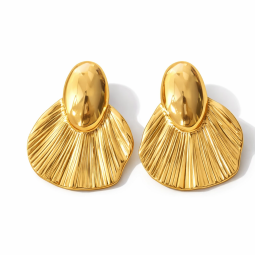
Gold Pleated Fan Earrings 11657958-1
Gold-tone stainless steel earrings: a polished domed oval from which a wide pleated fan hangs. Elegant, sunny and eye-catching.
Price €2.64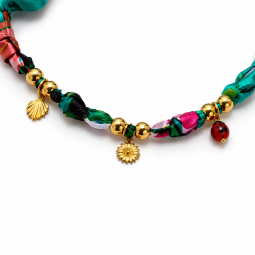
Turquoise scarf necklace with marine charms 50347569
A printed turquoise scarf ties behind the neck, with gold-tone details, shell and sun charms, and no extension chain.
Price €9.36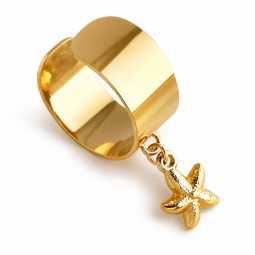
Gold Wide Starfish Ring 36674101
Gold-tone stainless steel band ring with a small textured starfish hanging below the finger. Summery.
Price €6.12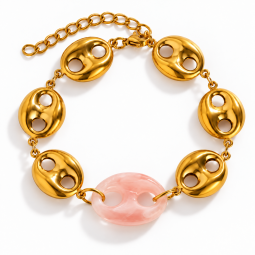
Coffee-bean link bracelet with a pink centre, gold tone 54708796
Broad gold-tone coffee-bean links surround a marbled pink centre element on this stainless steel bracelet with an extension chain.
Price €6.48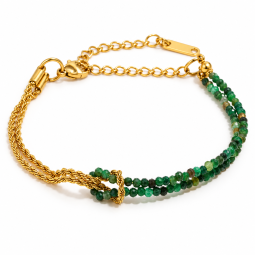
Half-rope bracelet with two green strands, gold tone 48148314
Two rows of faceted green beads join a gold-tone rope chain on a stainless steel bracelet with lobster clasp and extension.
Price €9.12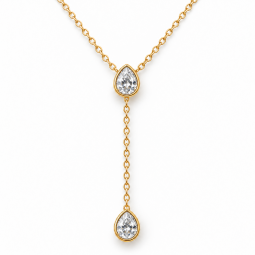

Gold-tone Y necklace with two clear drops 55721434
Gold-tone Y necklace with two clear drops. Stainless steel, adjustable fastening.
Price €6.12
Leave a comment