
Caring for your stainless steel jewelry: the complete guide
Durable, elegant, and easy to wear, stainless steel jewelry appeals to both professionals and private customers alike. To preserve its shine over time, a few simple habits are all it takes. Cleaning, storage, and everyday precautions: here is the complete guide to caring for your stainless steel jewelry.
Stainless steel jewelry is becoming increasingly popular, both among professionals and private customers. And this success is no coincidence. Modern, elegant, easy to match, and comfortable to wear every day, it has become a staple in many collections. But even though this material is known for holding up well over time, any piece of jewelry still needs a minimum of care to keep all of its shine. Stainless steel owes its corrosion resistance in particular to its chromium content, which forms a protective layer on the surface; this does not mean it is completely unaffected by chemical residues, standing moisture, or certain harsh environments.
So, how should you care for your stainless steel jewelry without damaging it? Should you take it off in the shower? Can you clean it at home? Which products should you avoid? In this complete guide, you will discover the right habits to adopt, the common mistakes to avoid, and the best ways to keep your stainless steel jewelry shiny for as long as possible.
Why is stainless steel jewelry so popular?
Stainless steel is appreciated first and foremost for its appearance. It offers a bright, modern, and timeless finish that works just as well for understated jewelry as for bolder pieces. It is also valued for its strong resistance to oxidation and corrosion compared with many other metals. This durability makes it an excellent choice for jewelry that is worn regularly.
Another major advantage is that caring for stainless steel jewelry remains simple. Contrary to what many people think, there is no need to use complicated or expensive products to keep it clean. In most cases, lukewarm water, mild soap, a soft brush, and careful drying are enough to restore its attractive appearance.
The right habits to adopt every day
The best care starts even before cleaning. In reality, it is above all your everyday habits that will influence how your stainless steel jewelry looks over time.
The first good habit is to limit contact with cosmetics and chemicals. Perfume, hairspray, cream, harsh soap, household cleaning products, and various residues can dull the appearance of a piece of jewelry or leave a film on its surface. Even though stainless steel is highly resistant, it is best to apply your beauty products before putting on your jewelry and wait a few moments until they have been fully absorbed. Jewelry care guides also recommend avoiding repeated exposure to substances such as chlorine, hairspray, or other chemicals.
The second essential habit is to wipe your jewelry after a busy day. Sweat, dust, soap residue, and skin marks always end up building up. Running a soft, clean cloth over your jewelry at the end of the day helps remove these deposits before they settle in. This simple gesture goes a long way toward preserving its shine.
How to clean your stainless steel jewelry effectively
When your jewelry starts to lose some of its shine, there is no need to scrub it with abrasive products. The best method is also the gentlest one.
Simple cleaning with lukewarm water and mild soap
Prepare a small bowl of lukewarm water with a small amount of mild soap. Then soak the jewelry for a few minutes if necessary, and use a very soft brush or a small soft-bristled toothbrush to gently clean the surface, corners, clasps, and raised details. This method is widely recommended in jewelry care guides to remove dirt without damaging the metal.
The goal is not to “strip” the jewelry, but to remove the deposits that dull its shine. Gentle but regular cleaning is generally far more effective than infrequent and overly harsh cleaning. If you sell to both professionals and private customers, this is also an excellent piece of advice to pass on to your clients: consistency matters more than force.
Drying: an essential step
Once the jewelry has been cleaned, rinse it carefully with clean water and dry it completely with a soft, clean, non-abrasive cloth. This step is crucial. Residual moisture, especially in clasps, raised details, or small crevices, can leave marks and visually dull the jewelry. Care recommendations stress the importance of drying the piece thoroughly and then lightly polishing it after cleaning.
What should you do if dirt is deeply embedded?
Some stainless steel jewelry includes links, engravings, raised patterns, or hard-to-reach areas. In that case, let the piece soak briefly in warm soapy water, then use a soft brush with light movements. Do not use abrasive sponges, steel wool, or scouring powder. Cleaning too harshly mainly risks scratching the surface and damaging the jewelry’s visual finish.
Mistakes you should absolutely avoid
Many pieces of jewelry lose their shine not because of time, but because of repeated poor handling.
The first mistake is using products that are too strong. Bleach, concentrated detergents, harsh cleaners, or unsuitable solutions should be avoided. Even on a resistant metal, these products can leave marks, damage certain finishes, or cause problems if the jewelry contains other decorative elements.
The second, very common mistake is believing that stainless steel jewelry can withstand everything without any care. Its resistance is real, but it is not absolute. Chlorinated environments, certain repeated exposures, and a lack of cleaning can still affect its appearance. Stainless steels resist corrosion well, but chloride-rich environments remain more demanding for them.
Finally, avoid storing all your jewelry loose together in a single box. Repeated friction between chains, rings, bracelets, and earrings can cause micro-scratches or knots, especially when the pieces are worn very often.
Can you wear your stainless steel jewelry in water ?
This is one of the most frequently asked questions. In practice, stainless steel jewelry generally tolerates occasional exposure to water well. This is, in fact, one of the reasons it is so appreciated for everyday wear. However, it is important to distinguish between clean water and repeated exposure to more aggressive environments such as chlorinated pool water or certain salt waters. Chlorides are known to be more demanding on stainless steel, especially over the long term.
In other words, wearing a piece of jewelry occasionally in the rain or while quickly washing your hands is nothing unusual. On the other hand, to maximize its lifespan and preserve its shine, it is better to remove your jewelry before going to the pool, taking long baths, swimming in the sea, or using household cleaning products. And if you do keep it on anyway, the ideal solution is to rinse it afterward with clean water and dry it carefully.
How to store your jewelry to extend its lifespan
Storage is an integral part of caring for stainless steel jewelry. Properly stored jewelry stays cleaner, gets scratched less, and keeps its attractive appearance for longer.
Ideally, each piece should be kept in a soft pouch, a compartmentalized box, or any storage solution that prevents direct friction. It is also preferable to store jewelry in a dry place, away from moisture and dust. Jewelry care advice specifically emphasizes the importance of keeping jewelry dry and protected.
For an online store, this point is also commercially interesting: a blog article like this one can naturally link to your displays, pouches, jewelry boxes, or storage categories if you offer them. This strengthens both the user experience and the site’s internal linking.
How to restore shine to stainless steel jewelry
Over time, a piece of jewelry may look a little duller, not because it is “damaged,” but because a film of residue has built up on it. In that case, a simple cleaning followed by gentle polishing is often enough to bring back its shine.
After washing with lukewarm soapy water, dry the jewelry perfectly and then gently polish it with a soft cloth. This helps remove the last traces and even out the surface finish. The point is not to apply heavy pressure, but rather to use light, steady movements. Care guides specifically recommend drying thoroughly and then buffing or polishing with a suitable cloth.
If a piece still appears marked despite this, it is best to avoid overly aggressive improvised remedies. Online, you can read all kinds of approximate tips. Yet when you want to keep a piece of jewelry in good condition, gentleness remains the best strategy. Simple, frequent, and measured care often gives better results than a “shock treatment.”
Caring for stainless steel jewelry with stones, pearls, or decorative details
Not all stainless steel jewelry is completely plain. Some pieces include rhinestones, decorative stones, pearls, glued elements, or more delicate details. In that case, care should be adjusted slightly.
The principle remains the same: gentle cleaning, little product, little standing moisture, and no prolonged soaking if the jewelry contains sensitive elements. When the structure is mixed, it is better to clean the metal part carefully rather than immersing the entire piece for a long time. Jewelry care guides also distinguish certain more fragile categories and advise against applying the same method to all materials.
This is also why it is useful to specify the main material and any decorative elements on a product page. The clearer the care instructions are, the more reassuring the customer experience becomes.
When should you clean your jewelry?
There is no universal rule, because everything depends on how often the piece is worn. Jewelry worn every day will obviously not have the same needs as jewelry worn only occasionally.
In practice, frequent light wiping is an excellent habit, and more thorough cleaning can be done as soon as the jewelry loses some of its shine, shows visible marks, or has been exposed to products, perspiration, or a demanding environment. Some care guides recommend regular periodic cleaning for jewelry that is worn often.
The simplest thing is to observe your jewelry. As soon as it seems less bright, slightly greasy, or marked, a quick cleaning is usually enough to restore its attractive appearance.
Conclusion
Caring for your stainless steel jewelry is not complicated at all. That is precisely what makes this material so strong: it combines elegance, modernity, and ease of care. By adopting a few simple habits, such as avoiding harsh products, cleaning with lukewarm water and mild soap, drying thoroughly after washing, and storing each piece away from moisture, you can extend its shine and lifespan without excessive effort. These habits are consistent with general jewelry care recommendations and with stainless steel’s corrosion-resistant properties, while still taking into account the limits related to chemical or chlorinated environments.
Whether you are a professional looking for advice to better inform your customers, or a private individual keen to preserve your favorite jewelry, remembering these best practices will make all the difference. Well-maintained jewelry stays shinier, more pleasant to wear, and more rewarding in everyday life.
Looking to add to your collection? Discover our stainless steel bracelets, necklaces, rings and earrings.
Frequently asked questions
Does stainless steel jewelry tarnish?
Stainless steel does not oxidise like silver. It can lose some of its shine through contact with perfume, creams or chlorine, but a quick wash in warm soapy water usually restores it.
Can I shower with stainless steel jewelry?
Stainless steel handles everyday water well, but soap, shampoo and limescale leave a dull film. It is best to take your jewelry off and dry it after any contact with water. Find out more in our article can you keep your jewelry on in water?
How do I clean gold-tone stainless steel jewelry?
Use warm water, a little mild soap and a soft microfibre cloth. Do not rub hard and avoid abrasive products to protect the gold colour, then dry the piece carefully.
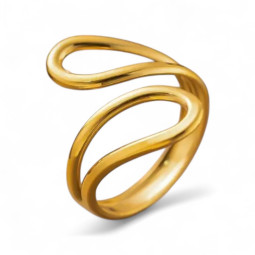
Gold Double Wire Wave Ring 11356689-5
Open gold-tone stainless steel ring drawn by a thick double wire that ripples and turns back on itself in a large, soft loop.
Price €3.96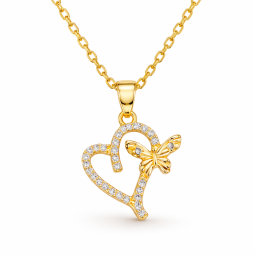
Gold-tone necklace with open heart and sparkling butterfly...
An open heart accompanied by a little sparkling butterfly forms the pendant of this gold-tone stainless steel necklace, with a 5 cm extension.
Price €3.60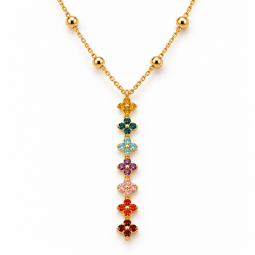
Gold-tone necklace with seven multicoloured flowers 51004482
Seven coloured flowers follow a fine beaded gold-tone stainless-steel chain, with a rear fastening and extension for the necklace.
Price €16.20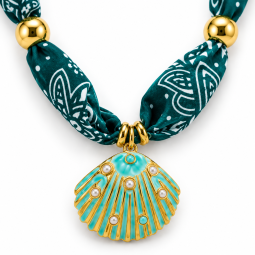
Green scarf necklace with turquoise shell-shaped pendant 49080300
Green fabric with white motifs supports a turquoise and gold-tone shell decoration, with beads and stainless-steel metal details.
Price €9.72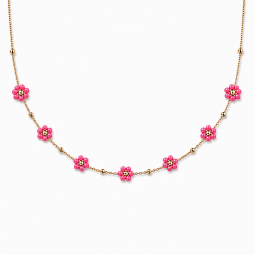
Gold-tone necklace with seven fuchsia flowers 37601652
Seven fuchsia flowers with gold-tone centres brighten a fine stainless steel chain, creating a floral necklace with a 5 cm extension.
Price €9.00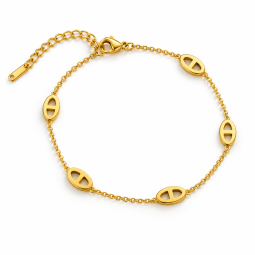

Fine bracelet with barred ovals, gold tone 53277794
Fine gold-tone stainless steel bracelet with spaced open oval motifs, each crossed through the centre, and an adjustable extension chain.
Price €3.24
Leave a comment