
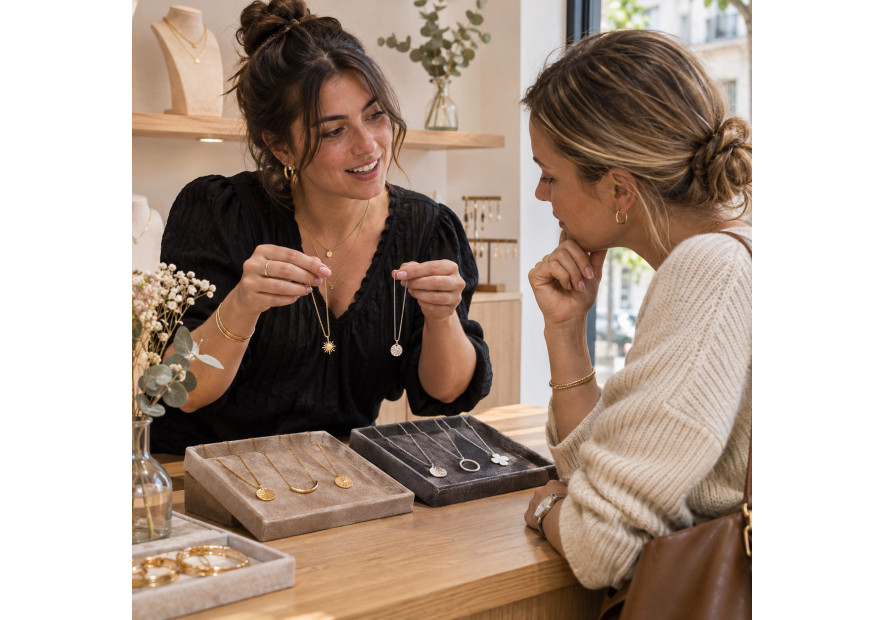
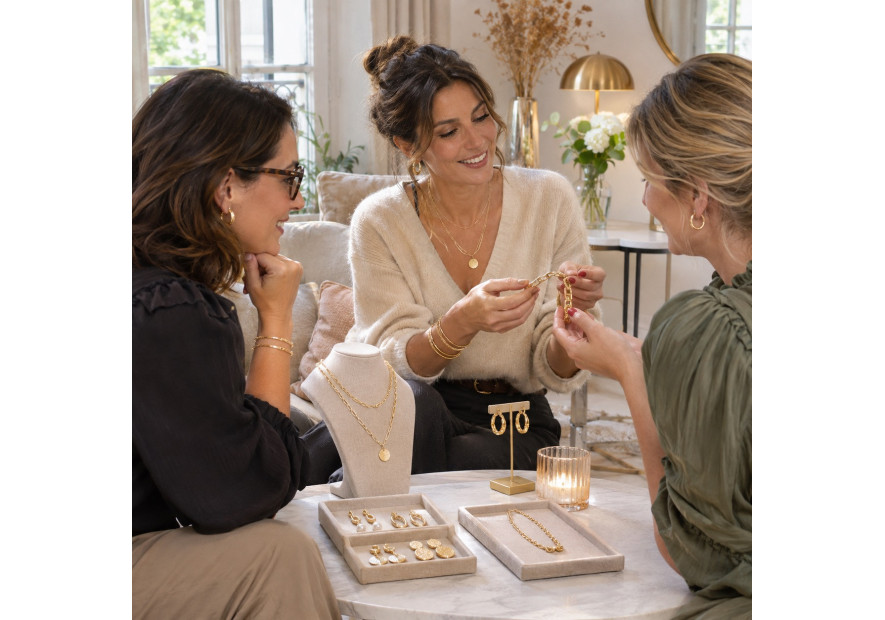
How to Choose Your Suppliers When Selling Jewellery in a Shop ?

In this article, we explain how to choose the right jewellery suppliers for a physical shop, which mistakes to avoid and why working with a specialist wholesaler such as Saze Diffusion can be a real advantage for increasing turnover, improving margins and offering customers a varied, modern and accessible jewellery collection.
Selling jewellery in a physical shop can be a very profitable business, provided you choose the right products and, above all, the right suppliers. Jewellery is often an impulse purchase. A customer walks into a shop, looks at the displays, picks up a piece, tries on a ring, compares several necklaces and finally decides to buy because she likes the design, because the price feels reasonable or because she can already imagine wearing it with one of her outfits.
But behind this seemingly simple sale, there is a great deal of selection work. A retailer must offer the right designs, at the right price, in the right materials, with enough quality to satisfy customers. Much of this depends on the supplier. A poor supplier can lead to stock shortages, low-quality jewellery, weak margins, long delivery times or a product range that does not match customer demand. On the other hand, a good supplier can become a genuine growth partner for your shop.
Choosing jewellery suppliers is therefore not a decision to take lightly. It has a direct impact on your store’s image, turnover, profitability and customer loyalty. Here are the key criteria to consider when making the right choice.
Understand Your Customers’ Expectations Before Choosing Suppliers
Before even looking for a supplier, you need to understand what your customers are looking for. Not every shop targets the same audience. A store located on a busy shopping street will not necessarily have the same strategy as a high-end concept store or an affordable fashion jewellery shop.
Are your customers looking for trendy jewellery at accessible prices? Stainless steel jewellery that can be worn every day? Gold-plated pieces with a more elegant look? Original, colourful, fine, minimalist or statement designs? The better you know your customers, the easier it becomes to select suitable suppliers.
A common mistake is choosing a supplier simply because the retailer personally likes the products. However, what matters most is what appeals to your target customers. A collection may look beautiful in a catalogue but fail to match your customers’ style, budget or buying habits.
If your shop targets customers who regularly buy fashion jewellery, it is often better to work with a supplier who can offer many references, regular new arrivals and accessible products. This makes it easier to refresh displays, create desire and give customers a reason to come back.
This is precisely where a site like Saze Diffusion can be useful for professionals. Its aim is to help retailers easily find a wide selection of jewellery suitable for resale in store, with models designed to meet today’s demand: trendy, easy-to-wear jewellery that suits customers who enjoy treating themselves without waiting for a special occasion.
Check the Quality of the Jewellery
The purchase price matters, but it should never be the only criterion. In fashion jewellery, perceived quality plays a major role. A customer may accept an affordable piece, but she still expects it to look good, feel comfortable and be durable enough for regular use.
The material is therefore essential. Stainless steel, for example, has become very popular in fashion jewellery shops because it offers several advantages. It is generally more resistant to tarnishing than many traditional fashion jewellery materials, keeps a nice appearance over time and is suitable for daily wear. For a shop, offering stainless steel jewellery can be a strong selling point, as customers are increasingly looking for durable, practical and easy-to-maintain products.
You should also examine the finishes: clasps, soldering, plating consistency, chain strength, quality of stones or decorative elements, ring comfort and the weight of earrings. A piece of jewellery can look very attractive in a photo but disappoint once held in the hand if the finishes feel too light.
Before ordering large quantities, it is advisable to test several models. A retailer must be able to assess the real quality of the product, see how it looks on a display, how it reacts to handling and how customers respond to it in store. The best suppliers are those that allow professionals to build a coherent range without taking excessive risks from the start.
With Saze Diffusion, the advantage for retailers lies in being able to build a varied range of jewellery suited to in-store sales, particularly around stainless steel pieces. This allows shops to offer a professional selection while keeping products easy to sell to a broad customer base.
Study Purchase Prices and Potential Margins
The profitability of a shop depends on a simple equation: buying at the right price, selling at the right price and keeping enough margin to cover expenses and make a profit. However, buying as cheaply as possible is not always the best strategy.
A very cheap piece of jewellery may seem attractive at first, but if it breaks easily, fails to appeal to customers or damages your store’s image, it can ultimately cost you more. Conversely, a slightly more expensive piece with better finishing, a more fashionable design and stronger sales potential can generate better profitability.
When choosing a supplier, you should therefore look at the purchase price, but also at the perceived value of the product. Jewellery that looks high-quality, is well presented and follows current trends can sell more easily. It can also help build customer loyalty, as shoppers will trust your selection.
You also need to consider your positioning. If your shop sells accessible jewellery, your supplier must allow you to maintain attractive retail prices without sacrificing your margin. If your store targets a more premium clientele, you will need suppliers offering more refined pieces while still remaining consistent with your final selling price.
A good supplier for a jewellery shop should offer the right balance between price, quality, style and availability. This is what allows retailers to sell regularly without having to choose between margin and customer satisfaction.
Choose Suppliers with a Wide Range of References
In a jewellery shop, variety is crucial. Customers like to compare, try things on, hesitate, return to one model and then discover another. The wider your range, the higher your chances of triggering a purchase.
A shop with only a few models may give the impression of limited choice. On the other hand, well-stocked displays with different styles of necklaces, bracelets, rings and earrings create a feeling of abundance and attractiveness. This does not mean buying anything and everything, but rather building a range that is broad enough to suit different tastes.
A good supplier should offer various product families: delicate jewellery, more visible statement pieces, gold-tone and silver-tone designs, fashion pieces, timeless models, trendy items, everyday jewellery, gift ideas and seasonal products. This allows you to create a complete and balanced range.
Working with a supplier that offers many references also makes testing easier. You can observe which models sell best, which colours attract the most attention, which jewellery categories generate the most purchases and then adjust future orders accordingly.
This is one of the major advantages of a site like Saze Diffusion, which is aimed at professionals looking to offer a broad jewellery selection in store. For retailers, access to many references makes it easier to renew collections and adapt their offer to current trends.
Check Stock Availability
A piece that sells well must be easy to reorder quickly. Stock availability is therefore a key criterion. Many retailers face the same problem: they find a model that performs very well, customers love it, but when they want to reorder, the supplier no longer has stock.
This can be frustrating because a bestseller can represent a significant share of turnover. If you cannot restock it, you lose sales and have to start again with another model.
It is therefore important to work with suppliers who can provide a minimum level of continuity on their products. Of course, in fashion and costume jewellery, some collections change regularly. But a serious supplier should have clear organisation, good visibility over stock levels and the ability to suggest alternatives when certain models are no longer available.
Stock management is even more important for physical shops, because an empty display or poorly filled shelves quickly create a negative impression. Customers should feel that the shop is lively, refreshed and well supplied.
A good supplier is not only useful for the first order. They must also support you over time with a renewed and sufficiently available offer to sustain your activity.
Analyse Delivery Times
Delivery time is another decisive factor. When running a shop, you cannot afford to wait too long to receive your products. Sales happen every day, stocks move, seasons change and trends evolve quickly.
A supplier with long delivery times can put your shop in difficulty. You may run out of products at the wrong time, especially before important sales periods such as Christmas, sales seasons, Valentine’s Day, Mother’s Day or summer.
You should therefore choose a supplier able to deliver within a timeframe compatible with your business. Speed matters, but consistency matters even more. It is better to work with a supplier who announces a realistic delivery time and respects it than with one who promises fast delivery but fails to deliver on time.
For retailers, being able to plan restocking is a real advantage. It allows you to organise displays, prepare commercial operations, refresh your window displays and avoid visible stock shortages.
When comparing several suppliers, do not look only at the products. Also consider logistics, shipping conditions, clarity of information and delivery reliability.
Choose a Supplier Suited to Professionals
Not every supplier is suitable for retailers. Some websites mainly sell to private customers, while others are designed for professionals. For a shop, it is better to work with a supplier who understands the needs of resellers.
A professional does not buy like a private customer. They need to think in terms of margin, stock rotation, presentation, inventory, range, restocking and profitability. They need resale-friendly prices, sufficient choice, reliable logistics and clear service.
A supplier specialising in professional sales understands that its customers need to resell the products. It should therefore offer a coherent range, products that are easy to integrate into a shop and conditions suited to commercial activity.
This is precisely the positioning of Saze Diffusion: helping retailers, jewellery shops, concept stores, accessory shops and independent resellers find jewellery suitable for in-store sales. The aim is not just to buy products, but to build a range capable of attracting customers and generating regular sales.
For a shop, this type of supplier can save a considerable amount of time. Instead of sourcing products one by one from many different places, the retailer can focus on a selection already designed for resale.
Follow Trends Without Losing Your Identity
Jewellery is closely linked to fashion. Trends change quickly: chunky chains, minimalist jewellery, adjustable rings, hoop earrings, pendant necklaces, fine bracelets, layering, gold-tone pieces, silver-tone pieces, natural motifs, colourful stones, symbolic jewellery and more. A shop must remain aware of these changes.
However, following trends does not mean buying everything that is fashionable. You must maintain consistency with your store’s identity. Customers should quickly understand your universe. If your shop offers accessible, modern and easy-to-wear jewellery, your selection must stay within that logic. If you mix too many styles without coherence, the offer may become confusing.
A good supplier should help you refresh your collection while keeping a clear line. They should offer current models, but also essentials that sell all year round. Basics are very important in jewellery: small hoops, fine chains, discreet bracelets, simple rings, gold-tone necklaces and timeless pieces. They reassure customers and help generate regular sales.
The ideal approach is to build a range balanced between trendy new arrivals and permanent bestsellers. New pieces attract attention, while basics ensure steady rotation.
Do Not Neglect In-Store Presentation
Your choice of supplier also affects how your shop is presented. Well-finished, coherent and varied jewellery is easier to showcase. A beautiful presentation can turn a simple product into an impulse purchase.
In store, jewellery must be visible, accessible and well organised. It is often useful to group items by type, colour, material or style. For example, you may have a dedicated area for gold-tone jewellery, another for silver-tone pieces, a display for rings, a wall for necklaces and a table for new arrivals.
When products come from too many different suppliers, with very different styles and quality levels, the presentation can become less harmonious. By contrast, working with a supplier offering a coherent range helps you create a more professional universe.
Customers also buy with their eyes. If the shop looks appealing, if the jewellery is well displayed and if the models feel current, sales naturally increase. The supplier therefore plays an indirect but very important role in the customer experience.
Test Products Before Ordering Large Quantities
Even with a good supplier, testing is always recommended. Not every model will sell in the same way. Some jewellery pieces that look very promising in photos may work less well in store, while simpler models can become true bestsellers.
Testing is an essential step. It helps you understand what your customers actually buy. You can order several styles, observe sales over a few weeks, note which models sell quickly, which ones are often tried on, which attract attention but do not convert, and then adapt your strategy.
This method reduces mistakes. Instead of investing too heavily in one trend, you gradually build a collection based on your customers’ real reactions.
Over time, you will identify your bestsellers: fast-moving pieces, successful price points, favourite colours and most requested materials. You will then be able to order more intelligently and improve profitability.
A good supplier should allow this flexibility. They should offer enough choice to test different ranges and enough consistency to reorder the models that work.
Compare Commercial Terms
Before choosing a supplier, carefully review the commercial terms. Several elements need to be checked: minimum order, shipping costs, delivery times, return conditions, customer service, invoice availability, payment methods and handling of defective products.
These details may seem secondary, but they have a real impact on your business. A minimum order that is too high can prevent a small retailer from testing a range. Shipping costs that are too expensive can reduce margins. Unclear return conditions can create problems if a product is defective.
It is therefore important to work with a transparent supplier. Information should be clear, easy to understand and suited to a professional relationship.
Trust is essential. A retailer must be able to order knowing what they are buying, under what conditions, within what timeframe and with what level of service. A serious supplier should not leave customers uncertain.
Avoid Depending on a Single Product Type
Even if certain categories perform very well, it is better not to depend on just one type of jewellery. A balanced shop should offer several product families. Necklaces often catch the eye, earrings sell easily, rings encourage trying on and bracelets help increase the basket value.
By diversifying the range, you increase the average order value. A customer who came in for a pair of earrings may leave with a matching bracelet. Someone buying a necklace may add a ring. This is particularly important in fashion jewellery shops, where multiple purchases are common.
Your supplier should therefore help you create coherent combinations. If you can offer jewellery in the same style, colour or universe, you make complementary sales easier.
Saze Diffusion can support this approach by offering different jewellery categories suitable for resale. For retailers, this makes it possible to create a more complete range and improve in-store presentation.
Choose a Supplier That Helps Renew Customer Interest
A customer returning to your shop should feel that there is something new to discover. Even if your bestsellers remain available, you should regularly introduce new models. Renewal is essential in jewellery retail.
Customers enjoy seeing new items, even when they do not come in with a specific purchase intention. A new collection, a refreshed display or just a few different models can be enough to trigger a sale.
An interesting supplier should therefore offer an evolving range. If the references remain exactly the same for too long, your shop may lose momentum. On the contrary, a supplier with regular new arrivals helps you keep your store lively.
Renewal also makes communication easier. You can promote new arrivals in your window display, on Instagram, in stories, through newsletters or directly to loyal customers. Every new selection becomes an opportunity to create traffic.
Think About Loyalty, Not Just the First Sale
A jewellery sale should not be seen as an isolated transaction. If the customer is satisfied, she may come back, recommend the shop, buy gifts or follow your new arrivals. Customer loyalty is therefore a major issue.
To build loyalty, you need to offer a positive experience: attractive products, good quality, coherent prices, a pleasant shop and a regularly renewed range. The supplier directly contributes to this satisfaction. If the jewellery holds up well, if customers receive compliments and if they want to buy again, you have earned their trust.
On the other hand, if the jewellery disappoints, even at an accessible price, the customer may not return. She will associate the poor experience with your shop, not with the supplier. That is why products must be selected carefully.
A good supplier is therefore a loyalty partner. They help you offer jewellery that appeals, sells well and makes customers want to come back.
Why Work with Saze Diffusion for Your Jewellery Shop?
When you sell jewellery in a shop, you need to move quickly, buy well and offer a range that immediately attracts customers. Saze Diffusion is aimed at professionals looking for jewellery suitable for resale, with a selection designed for boutiques, accessory shops, concept stores and resellers.
The advantage of working with Saze Diffusion is access to a wide, modern and coherent offer, especially around stainless steel jewellery. This type of product responds very well to current expectations: customers want elegant, easy-to-wear, resistant and accessible jewellery.
For retailers, Saze Diffusion can save time in product sourcing. Instead of multiplying suppliers, comparing dozens of catalogues or taking the risk of ordering jewellery poorly suited to in-store sales, you can build a collection more quickly with models selected for their commercial potential.
Saze Diffusion can also suit shops that want to renew their displays regularly, test new models and offer an attractive range without making their organisation more complicated. In a physical shop, simplicity is valuable: you need to be able to order, receive, display and sell efficiently.
Mistakes to Avoid When Choosing Suppliers
The first mistake is choosing only the cheapest supplier. Price matters, but it should never replace analysis of quality, style and sales potential. A product that feels too low-end can harm your image.
The second mistake is ordering too many quantities without testing. Even if you like a model, you need to check whether your customers like it too. Testing several references is often smarter than immediately betting everything on one range.
The third mistake is neglecting delivery times. A slow or unreliable supplier can create stock shortages at the wrong moment and make you lose sales.
The fourth mistake is not tracking sales. To buy well, you need to know what works. Keep track of your bestsellers, observe which models attract attention and adapt your orders.
The fifth mistake is failing to build a clear identity. A jewellery shop must have a recognisable universe. Even with many references, the offer should remain readable and coherent.
Conclusion
Choosing your suppliers when selling jewellery in a shop is a strategic decision. A supplier should not simply provide products. They should help you sell better, build customer loyalty, protect your margins and keep your shop active every day.
The essential criteria are jewellery quality, style coherence, purchase prices, variety of references, stock availability, delivery times, commercial conditions and the ability to regularly refresh the offer. By taking the time to choose your suppliers carefully, you secure your business and increase your chances of developing a profitable shop.
For professionals who want to offer trendy, accessible jewellery suited to in-store resale, Saze Diffusion is an interesting solution. With an offer designed for retailers, the site allows you to create an attractive collection, easily renew your displays and meet the expectations of customers looking for modern, elegant and easy-to-wear jewellery.
In jewellery retail, success depends on the right product, at the right time, at the right price. And that success always starts with the right supplier.
To build your range, browse our stainless steel jewelry catalogue, our bracelets and necklaces, as well as our displays and packaging.
Read also: the must-have jewellery pieces to offer in a shop
Frequently asked questions
How do you check the quality of a jewelry supplier?
Order samples first, check finishes, clasps and packaging, and ask for product compliance information for your country’s rules.
Should you choose a local or a distant supplier?
A nearby supplier delivers faster and makes restocking easier; a distant one may be cheaper but requires more stock and longer lead times. Many retailers combine both.
How much should you order the first time?
A small, varied quantity to test demand, then targeted restocks of the best-selling models.
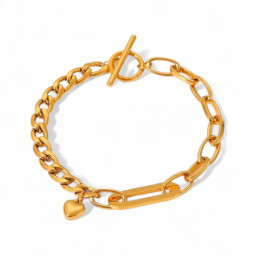
Gold T-Bar Heart Charm Bracelet 11060657-6
Gold-tone stainless steel bracelet mixing curb and oval links, with a T-bar clasp and a heart charm. Romantic and modern.
Price €9.48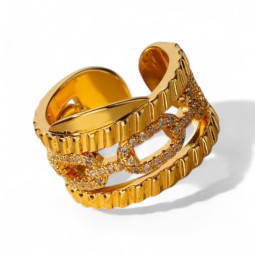
Gold Ridged Links Ring 11324925-1
Wide open band in gold-tone stainless steel made of ridged oval links interlocking on several levels.
Price €6.72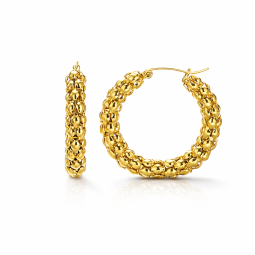
Gold Chunky Textured Hoop Earrings 11649120-1
Thick round hoops in gold-tone stainless steel, entirely covered with small raised bobbles. Bold, vintage and dazzling.
Price €3.84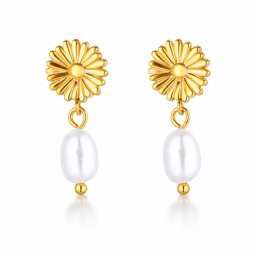
Gold Sunflower Pearl Drop Earrings 11587898-3
Gold-tone stainless steel earrings: a sunflower with fine petals and a hanging baroque-shaped white pearl. Natural and radiant.
Price €6.84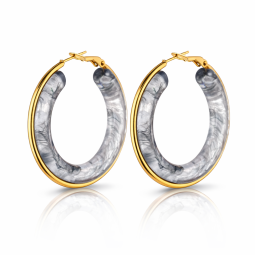
Gold Grey Enamel Hoop Earrings 11496944-3
Large gold-tone stainless steel hoops, a thick ring filled with grey enamel shaded with white. Graphic, modern and eye-catching.
Price €5.88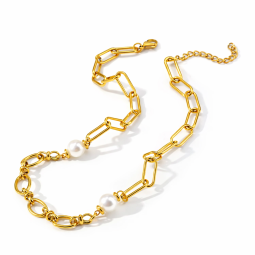

Gold-tone elongated-link necklace with three white beads...
Three white pearly-looking beads interrupt a large-link gold-tone stainless steel chain, with a 40 cm length and 5 cm extension.
Price €6.20
Leave a comment