
Which jewellery should you give for Valentine’s Day? A guide to choosing thoughtfully
Choose Valentine’s jewellery around taste, measurements and budget, with necklaces, bracelets, rings and earrings from the catalogue.
Choosing jewellery for Valentine’s Day begins with a simple question: what will the person enjoy wearing after 14 February? A gift can express affection without becoming a spectacular declaration. A fine chain, textured earrings or a discreet bracelet can become treasured reminders because they suit the recipient’s habits and the moment you share. The most appropriate piece is not necessarily the largest or most explicitly romantic design.
To find a thoughtful option, observe their style, define your budget and check the model’s specifications. This guide helps you compare categories, choose a message and prepare your order. The examples come from the Saze Diffusion catalogue and should be considered alongside current product information, availability and the wearer’s preferences. They are suggestions to refine a choice, rather than promises that one model will suit every person or relationship.
Observe their style before looking for a symbol
Look at the jewellery they actually wear
Accessories worn regularly reveal more than assumptions about what a romantic gift should look like. Notice finishes, earring sizes and whether they wear pendants. Someone who always chooses small studs may not want long earrings even for a special occasion. Similarly, owning fine chains does not necessarily mean they want a large matching set. Start with real preferences before considering how the gift will appear in its packaging.
Notice wearing frequency too. Some people change jewellery daily; others keep a few familiar pieces. You might choose an easy addition or a new shape close to their preferences. If you have discussed jewellery, remember specific comments: an awkward clasp, a favourite length or a motif they like. Those details are more useful than a general rule, and they help you select something that can become part of the person’s everyday choices.
Choose a finish without imposing a category
Gold-tone or silver-tone finishes should primarily reflect the recipient’s preferences. Their existing jewellery gives a useful indication without creating an absolute rule. Some enjoy mixing finishes; others prefer continuity. Avoid rigid prescriptions based only on hair or skin colour. A present should leave the wearer free to enjoy what they like. Consider other familiar accessories as well, but do not assume every piece must match perfectly to feel personal.
For composition, distinguish material from finish. Gold-tone stainless steel must not be described as solid gold, and a silver-coloured piece is not automatically sterling silver. Read the exact product page. Precise language helps establish appropriate expectations instead of inferring a material from a colour word or bright photograph. Where an essential detail is missing, ask rather than filling the gap with an assumption about what similar jewellery is usually made from.
Consider everyday life
A very active person may favour familiar shapes and fastenings they find easy to use. Someone who enjoys styling outfits may appreciate a more prominent piece. These remain personal considerations: small dimensions do not guarantee comfort and an adjustable chain has limits. Relate the design to their habits, then check the stated measurements instead of relying on an impression from a screen. Think about how the piece will be worn beyond the moment it is offered.
Necklace, bracelet, ring or earrings: choose the category
A necklace for a visible, personal present
A necklace lets you select a simple line or a more explicit motif. Length matters as much as the pendant: the same model will not sit identically on every person or garment. If you know a necklace the recipient enjoys wearing, its measurements can provide a reference. Check base length, extension and motif placement where stated. Separate those measurements rather than treating the longest possible setting as the only relevant length.
A bracelet for an easily combined gesture
A bracelet can accompany a watch or other chains when the volume and ease suit the wrist. An extension allows some adjustment but does not mean one size fits all. Compare measurements with a bracelet already worn comfortably. Check the fastening as well: an appealing shape becomes less useful if its operation does not suit the recipient’s usual movements. The choice should be practical for the wearer rather than only convenient for guessing a size.
Earrings when you know their preferences
Before choosing earrings, check that the person wears them and that the fastening suits their use. Diameter, height and weight where provided help comparison. Photographs suggest a style without guaranteeing identical comfort for everyone. If you do not know their habits or possible sensitivities, do not infer them from a broad product claim. A familiar style and fastening can offer a more informed starting point, while still leaving room for a new design.
A ring when size can be established
A ring can carry a strong message, but choosing one requires size and style information. An adjustable design has a limited adjustment range, not automatic compatibility with every hand. Do not force an opening to match an assumed measurement. If size remains unknown, another jewellery category can simplify the choice while retaining your intention. The surprise can concern the model and presentation without requiring you to ignore an important fit question.
| Category | Possible preference | First detail to check | Point to remember |
|---|---|---|---|
| Fine necklace | Discreet pieces near the face | Length and extension | Pendant position |
| Composed necklace | Ready-made layering | Strand lengths | Overall volume |
| Bracelet | Jewellery at the wrist | Length and ease | Operating the clasp |
| Earrings | Accessories near the face | Dimensions and fastening | Wearing habits |
| Ring | A piece chosen for the hand | Size or adjustment range | Adjustable is not universal |
Give the present a message suited to your relationship
A heart for someone who enjoys affectionate motifs
A heart communicates affection clearly, but it is not compulsory for Valentine’s Day. Choose an interpretation that suits the person: understated, openwork, textured or more visible. If they like simple lines, a prominent symbol may feel less personal than a piece without a motif. A card and shared memory can convey romance as clearly as the jewellery’s shape. Let the recipient’s preferences help determine how explicit the design should be.
A neutral shape can let the thought speak
A bead bracelet, pale drop or twisted texture can become an affectionate gift without an imposed meaning. Explain what made you think of the person: a colour they wear, a shape they enjoy or an outfit you remember. Avoid inventing a power or tradition to make the present sound more important. An attentive choice already gives it a story. The meaning can also grow through the way it is worn after the occasion.
A gesture proportionate to the shared moment
A first Valentine’s Day, an established relationship and a preference for very discreet gifts do not necessarily call for the same presentation. Consider what will put the recipient at ease. Spending is not a measure of feeling. A piece they will enjoy wearing, thoughtful packaging and a personal message can be more appropriate than a set selected only for its effect when opened. Choose a form of attention that suits the relationship as you both experience it.
Six catalogue ideas to refine your selection
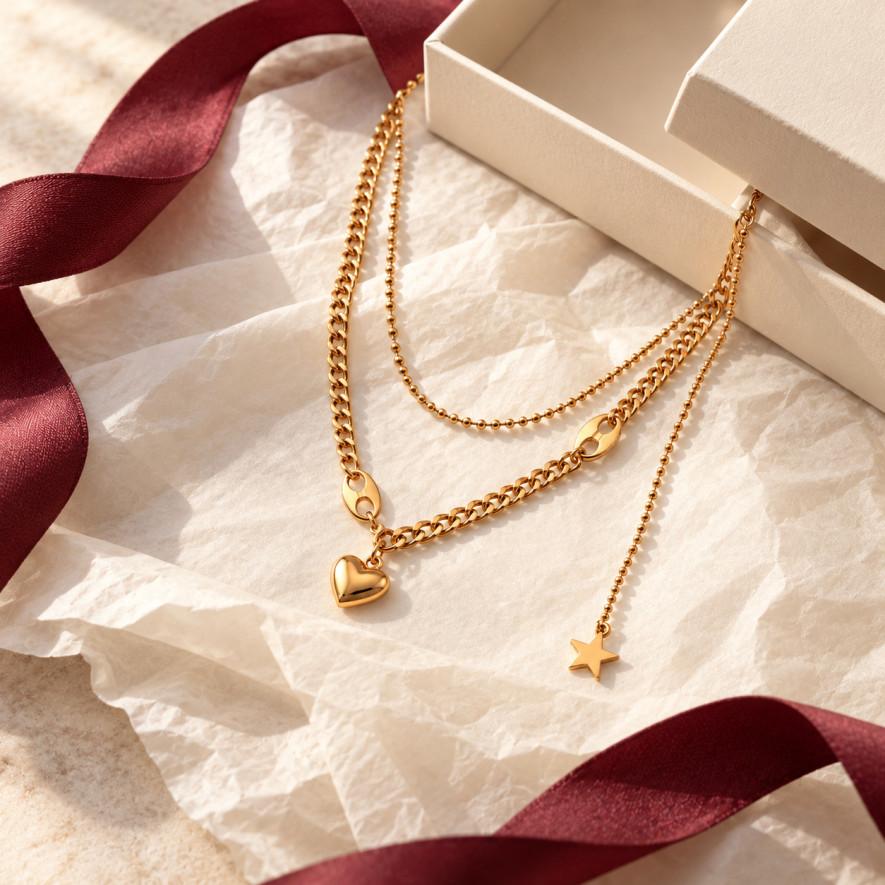
A heart and star in a double-strand composition
The double-strand heart-and-star necklace 52305252 combines two gold-tone chains with a small side drop. It is an option for someone who enjoys composed jewellery. The page lists lengths of 40 and 45 cm with a 5 cm extension. Consider the necklines they usually wear and do not present it as two independent necklaces. The arrangement is part of the assembled model, which should be assessed as a complete design.
A pale drop for an understated style
The pearlescent-drop pendant necklace 50980723 has a fine chain and a white pendant with a pearlescent appearance. The listed length is 39 cm with a 5 cm extension. It provides a starting point for someone who likes discreet shapes. Pearlescent describes the decorative appearance rather than proving natural mother-of-pearl. Use the stated information to judge both the visual idea and the practical fit of the necklace.
A bead bracelet for an everyday reminder
The fine gold-tone bead bracelet 11138909 alternates beads in two sizes on a fine chain. Its stated length is 16 cm with a 5 cm extension. Compare this with the recipient’s wrist and preferred ease. It can be worn alone or considered alongside familiar combinations, without assuming every stack will be comfortable. Check that its proportions and fastening make sense for how the person usually wears bracelets.
Three rhinestones for a bright detail
The fine gold-tone three-rhinestone bracelet 10201217 adds a point of sparkle through three round decorative elements. The product page lists 17 cm and a 5 cm extension. It offers another option for someone who prefers delicate jewellery. Rhinestones remain separate decorations rather than the main material, and should not be called diamonds when describing the present. Compare this reference independently from another fine bracelet rather than transferring its measurements automatically.
White studs for a known preference
The gold-tone pearl stud earrings 11137538-2 are listed at 1.2 cm and sold as a pair. Their decorative white pearl creates a rounded volume near the lobe. Choose them when this format matches the recipient’s habits and check the fastening. The name does not establish a natural pearl composition or guarantee that no skin will react. A familiar format helps you make an informed choice without promising a universal experience.
A twisted texture when size can be checked
The double twisted-wire ring 11324925-2 combines two parallel lines on an open band. Its page describes it as adjustable without claiming unlimited compatibility. It may suit someone attracted to textured surfaces, provided the model’s possibilities match the required size. Ask before ordering if that information is missing. The open construction should be understood as a feature with limits, rather than a reason to disregard ring sizing altogether.
Define a budget for the complete gift
Include all the expenses
Set the amount you want to spend before comparing models. Include the jewellery, possible delivery charges and your chosen packaging. Check what is actually supplied: a box in an illustration does not establish that it accompanies the order. The basket total remains the reference for your purchase because prices and conditions can change. Keeping the complete amount in view helps you compare options without discovering an unexpected difference at checkout.
Choose one suitable piece rather than collecting models merely to reach a spending target. An assortment is worthwhile only when every element matches the recipient’s taste and measurements. Explore the stainless steel jewellery catalogue for other possibilities, then compare a short selection rather than keeping dozens of references with unrelated styles. A smaller shortlist makes it easier to identify the detail that matters most to the person who will wear the gift.
Preserve the surprise without multiplying assumptions
If uncertain, a discreet question about favourite finishes or categories may help. You can also use something the person has already said without inventing a size from a photograph. The surprise can lie in the model, presentation and moment of giving. It does not require abandoning information necessary to choose wearable jewellery. Asking one useful question can still leave the individual piece and the message entirely unexpected.
Prepare the order and the moment of giving
Check delivery information when purchasing
A dispatch date and delivery date describe different stages. Consult current information for your destination and leave time to receive and examine the order. This article sets no final order date: transport, availability and preparation can change. If the occasion is close, request information specific to your order rather than relying on an old estimate. An expected dispatch time should not be treated as a guaranteed arrival date.
Read the conditions and examine the received piece
Before paying, check the reference, variant, contents and applicable conditions. On arrival, inspect the jewellery and fastening carefully without unnecessarily removing or altering identification materials. Contact the seller with precise information if something differs from your expectations. You do not need to wait until the gift is offered to discover a model or size mix-up. Keeping the reference available helps make a question or request clearer.
Add a message in your own voice
A few personal lines are more useful than a formula promising an exceptional effect. Mention what you enjoy sharing or the particular reason behind the choice. Keep the jewellery separate from objects that could scratch decorative surfaces and avoid sprays on the piece. Careful presentation and an appropriate message extend the attention given to selection without dictating how the recipient should respond to the present.
Frequently asked questions about Valentine’s jewellery
Is a heart compulsory?
No. A heart may suit someone who likes the motif, but a simple design can be equally personal. Choose according to their taste and explain the thought in a card. A familiar symbol of love does not replace jewellery suited to their habits, measurements and preferred style. There is no need to choose a design they would not otherwise enjoy simply because of the date.
What if I do not know their ring size?
A necklace, bracelet or earrings offer other possibilities, provided their own measurements and use are checked. An adjustable ring still has limits. If you specifically want to give a ring, establish the required size and the model’s range instead of assuming an opening solves every difference. Keeping the present wearable is part of making the choice thoughtful.
Can a modest budget produce a personal gift?
Yes. Thoughtfulness comes partly from attention to taste, the selected model and the message. Set an overall budget including possible charges, then compare available specifications. Avoid equating higher prices with stronger feelings or adding multiple pieces when the person prefers discreet jewellery. A single well-considered choice can reflect the recipient more accurately than an assortment built around its total cost.
Is stainless steel jewellery suitable for the occasion?
You can choose it if the material suits the recipient’s preferences and the characteristics you seek. Read the exact model’s description, including its finish and decorative elements. Do not promise suitability for every skin type, absolute resistance to every use or a precious-metal composition that is not stated. The material is one part of the choice alongside style, dimensions and everyday wearing habits.
When should I order for 14 February?
Check current delivery information for your destination and allow time to receive and inspect the order. A broad promise in an article does not replace the conditions displayed when purchasing. If the date is near, ask the seller about actual possibilities. Keep expected dispatch and guaranteed delivery distinct, and avoid relying on a deadline that was published for a different year or destination.
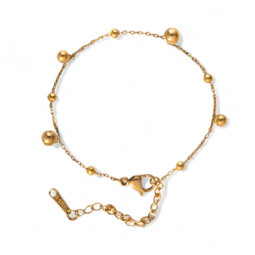
Gold Fine Chain Bead Bracelet 11138909
Fine gold-tone stainless steel chain bracelet dotted with polished beads of two sizes. Light and feminine.
Price €3.54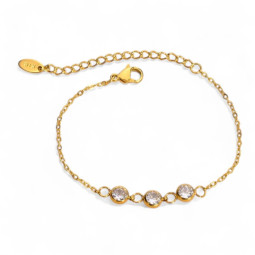
Gold Fine Three Rhinestone Bracelet 10201217
Fine gold-tone stainless steel chain bracelet with three bezel-set round rhinestones. Delicate and bright.
Price €5.04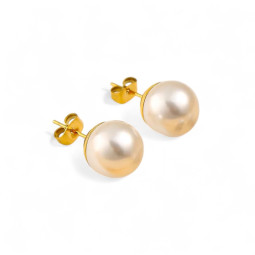
Gold Pearl Stud Earrings 11137538-2
Gold-tone stainless steel stud earrings set with a large round white pearl. Timeless, elegant and easy to wear.
Price €1.68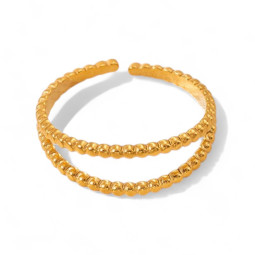
Gold Double Twisted Wire Ring 11324925-2
Slim open gold-tone stainless steel ring made of two parallel twisted bands, set slightly apart.
Price €2.52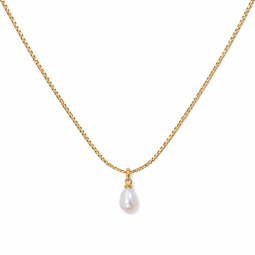
Gold-tone necklace with a pearlescent drop pendant 50980723
A small white pearlescent-look drop finishes this fine gold-tone stainless steel necklace with a lobster clasp and extension chain.
Price €4.68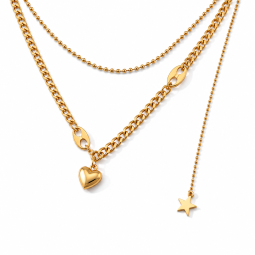

Gold-tone double-layer heart and star necklace 52305252
Two gold-tone chains, a smooth heart and a hanging star create this double-layer stainless steel necklace.
Price €5.28
Leave a comment