
Clover, heart and tree-of-life jewellery: which meaning for which gift?
Clover, heart or tree of life: explore possible meanings for a personal gift while considering the recipient’s style and wearing habits.
A clover to encourage a friend, a heart to express affection, a tree to evoke family ties: jewellery motifs let you give a present with an intention. Their appeal goes beyond their outline. They can recall a shared story, a milestone or a person, provided the recipient will enjoy wearing the design. A familiar symbol becomes more personal when it reflects both the relationship and the wearer’s taste.
The meanings discussed here are common interpretations and gift suggestions, not a universal language. The same shape can mean different things across cultures, tastes and personal histories. Jewellery does not guarantee luck or protection. The most appropriate message is the one you wish to convey, explained simply in your own words. You can appreciate a motif aesthetically without adopting any symbolic interpretation at all.
Choose an intention before choosing a motif
Start with the person receiving the jewellery
Consider what they already wear: small pieces, visible pendants, wide rings, gold-tone or silver-tone finishes. A symbol that moves you may not suit their habits. Notice the accessories they keep for a long time and the shapes they choose spontaneously. The present feels more personal when its design and use suit the individual, rather than following a general rule about what a motif ought to mean.
Think about your relationship too. A heart can express friendship or family affection, but it may also be understood romantically. If ambiguity would be uncomfortable, include a clear sentence or choose another shape. You do not need an elaborate story: a sincere thought linked to a particular memory often gives the jewellery its meaning. Let the message describe your intention instead of assuming the recipient will interpret the object exactly as you do.
Distinguish symbolism from a promise
Saying a clover evokes luck describes a symbolic association. Promising that it will bring success claims an effect the jewellery cannot guarantee. The same distinction applies to words such as protection, energy or healing. You can offer an object as a sign of encouragement and presence without attributing powers to it. This wording respects the recipient’s beliefs and freedom to interpret the gift in their own way.
Leave room for enjoying the design
Someone may like an openwork tree for its lines, a clover for its symmetry or a heart for its curves without looking for a particular meaning. Not every choice needs a symbolic explanation. If the person enjoys jewellery for its style, present the gift as a piece chosen for them. Meaning may develop later through the memory of receiving it, rather than arriving fully defined in a story attached to the packaging.
The clover: encouragement and a wish for good fortune
A motif for a new chapter
The four-leaf clover is often associated with luck in contemporary gift-giving. It can accompany a new job, exam, move or project. Keep the message concrete: “Thinking of you as you begin this next chapter.” The design then becomes a reminder of your support, without turning an expected result into a promise attached to an object. Choose a wording that remains kind even if the project develops differently from what was hoped.
Avoid assigning a precise meaning to every leaf as if there were one compulsory interpretation. Different stories circulate, and the recipient may have their own. If you want to connect four personal ideas with the motif, make clear that this is your reading. You might associate the gift with four shared memories without presenting that affectionate invention as an established historical tradition or a meaning everyone is expected to recognise.
Recognise the actual design offered
In jewellery, a four-lobed motif can suggest a clover without reproducing a plant exactly. Read the description and look at the photographs. Leaves may be rounded, heart-shaped or formed from decorative surfaces. The number of motifs, their dimensions and the colour of their borders also change the result. A single clover creates a different appearance from a sequence of charms distributed around a chain or down several drops.
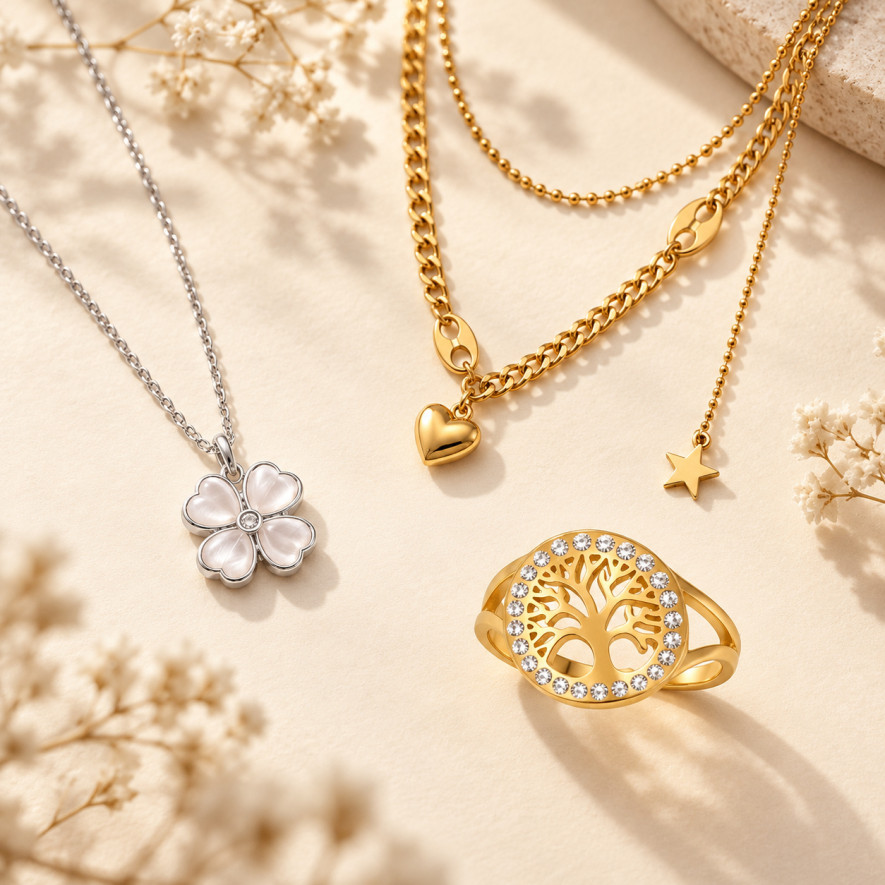
The silver-tone white four-leaf clover necklace 33537003 has four white heart-shaped sections bordered by a silver-tone finish. It is an option for someone who likes pale motifs and fine chains. The product page lists a 39 cm chain with a 5 cm extension. Its iridescent appearance does not establish that the decorative material is natural mother-of-pearl. Separate what the design looks like from what its composition actually confirms.
The heart: different ways to express affection
A symbol beyond romantic gifts
A heart can express love, tenderness, friendship or gratitude, depending on the context. For a mother, sister or friend, a few words clarify what you want to celebrate. For a romantic gift, choose how prominent the motif should be according to the wearer’s taste. A tiny understated heart and a large sparkling pendant can convey the same intention through very different styles, so symbolism alone does not determine the best model.
Do not assume someone will enjoy romantic-looking jewellery simply because the occasion suggests it. Some prefer geometric lines, chains or bracelets without explicit symbols. A simple piece and a card can communicate affection. Respecting those preferences makes the present more thoughtful than choosing a motif only because it is conventionally linked with love. The individual’s enjoyment remains part of the meaning of the gift, rather than a secondary detail.
Examine how the motif is interpreted
An open heart lets the garment show through, a solid heart reflects light, and several small hearts create a rhythm. Look at the jewellery both from a distance and close up. Where the model includes rhinestones or a coloured surface, check the stated details. The drawing conveys an intention while specifications help you choose an object suited to the desired wear. Neither replaces the other when selecting a present.
The double-strand heart-and-star necklace 52305252 combines two chains, a heart and a small suspended star. It offers an option for someone who likes ready-made layered designs. The listed lengths are 40 and 45 cm, with a 5 cm extension. It is an assembled model; the side star is part of its design, without an imposed meaning. Check the complete arrangement rather than treating it as two independent necklaces.
The tree of life: connections and the journey so far
A personal reading of family and growth
In contemporary gifts, the tree of life can evoke roots, family connections, continuity or personal development. These are possible interpretations rather than the single definition of a motif found in varied cultural contexts. For a family present, explain what the branches remind you of: people connected, a continuing story or memories that remain linked. Keep your explanation personal rather than presenting one reading as the only authentic interpretation.
For a new stage, a tree image may accompany a message of confidence about moving forward while keeping familiar foundations. Avoid turning a sensitive situation into a compulsory story of strength or rebirth. The person may not want to give their experience that meaning. A gentle, open message leaves more space for their feelings than assigning an interpretation on their behalf. The gift can express your presence without explaining their life for them.
Choose a size that suits wearing habits
Trees often have branches and roots that need enough surface to remain readable. Check the motif’s diameter and placement. A medallion ring may occupy more of the finger than a fine band. If the recipient usually wears understated pieces, consider whether the design’s visual presence will suit them before focusing only on its significance. Its symbolism does not remove the practical questions of size, proportion and comfort.
The gold-tone tree-of-life rhinestone ring 41237768 features an openwork medallion surrounded by rhinestones. Its setting is described as gold-tone stainless steel and its band as adjustable. Adjustment does not guarantee suitability for every size. Check the product information or ask for advice if size is decisive. The rhinestones are decorative elements and should not be described as diamonds. Preserve those distinctions when writing a card or explaining the present.
Compare motifs with the message of the gift
The table suggests possible connections. Choose one, combine several or select jewellery solely for its design. Always relate the intention to the person’s habits before deciding. An occasion does not dictate a particular category or shape. A personal explanation often communicates more clearly than a symbol whose meaning you assume is obvious. The wearer can also keep their own reading alongside the intention that led you to choose it.
| Motif or shape | Possible association | Possible occasion | Useful check |
|---|---|---|---|
| Clover | Encouragement, a wish for luck | New project | Shape and number of leaves |
| Heart | Affection, love, gratitude | Couple, family, friendship | Message suited to the relationship |
| Tree of life | Connections, continuity, growth | Family or personal milestone | Size and readability |
| Twisted lines | Connection or a journey in your reading | Shared memory | Ring size and comfort |
| Drop or beads | Enjoyment of a shape, without a fixed meaning | Style-led gift | Dimensions and stated material |
A texture can carry your story too
The double twisted-wire ring 11324925-2 does not need a universal meaning to become a personal gift. Its two lines may remind you of a connection or simply suit the recipient’s taste for textured surfaces. Present that interpretation as yours. The model is open and adjustable; you still need to check compatibility with the intended finger. A story adds affection, but it does not extend the physical adjustment range of a piece.
Jewellery without an explicit symbol is still thoughtful
The fine gold-tone bead bracelet 11138909 can be chosen for its beads in two sizes and delicate appearance. Connect it with a memory personally without claiming every bead traditionally represents something. The page lists 16 cm with a 5 cm extension. Compare those measurements with the person’s wrist and preferred ease. The choice can reflect how they dress every day without requiring a hidden message in each individual detail.
The pearlescent-drop necklace 50980723 provides another option if you prefer a simple shape. Its drop may appeal through a pale reflection and rounded outline, without a coded message. The gold-tone finish and white pendant describe appearance. Do not assign emotional powers or an undocumented natural composition: the memory of receiving the gift can make it personal. Let the product information establish its characteristics and your own words explain why you chose it.
Check the jewellery beyond its symbolism
Read materials, dimensions and fastenings
A meaningful motif does not replace a suitable choice. Check necklace length, ring volume and how the fastening works. Compare with something the person already wears if that reference is available. Gold-tone is not a promise of solid gold; a silver-coloured surface does not necessarily mean sterling silver. Read the stated composition for the exact reference, particularly when several similar designs or variants appear together in the catalogue.
Ask before ordering if an important detail is missing. An open ring is not automatically universal and an extension has a limited range. Look at photographs from several angles. To discover other designs and compare categories, explore the stainless steel jewellery selection. Choose from current product information rather than an old screenshot. A clear measurement or answer can help preserve both the surprise and the practical suitability of the present.
Explain the intention without imposing an interpretation
A card can express your thought in one or two sentences: “This clover to accompany your new project,” or “This tree made me think of our connections.” Avoid promising a result or attributing an emotion the recipient has not expressed. Leave room for them to simply like the jewellery, independently of the meaning you imagined. A gift can hold two perspectives without either person needing to define the other’s response.
Present and store the piece carefully
Keep chains separate to reduce tangles and protect decorative surfaces from rubbing. Check what the order actually includes: a presentation image does not establish that a jewellery box is supplied. Pass on the care recommendations for the model. Practical care extends the thought behind the present without adding broad promises about absolute resistance or use without precautions. A suitable storage arrangement is especially helpful for chains or pieces with several small decorative elements.
Frequently asked questions about symbolic jewellery
Does clover jewellery really bring good luck?
It can represent a wish for luck or encouragement, but it does not guarantee favourable events. Its symbolic value depends on the person and the accompanying message. Present it as a thoughtful gesture for a new chapter or an affectionate reminder, without attributing protection or success to the object. The support behind the present can matter without making claims about its effects.
Can I give a heart to a friend?
Yes, if the motif suits your relationship and their taste. A heart can express friendship as well as romantic affection. A short card clarifies your intention if ambiguity concerns you. You can also choose a more neutral design for someone who prefers jewellery without explicit symbols. The most appropriate choice depends on the person rather than a rule attached to the occasion.
Does the tree of life have a single meaning?
No. Interpretations vary across contexts and individuals. Connections, roots and growth are possible associations in a contemporary gift. Avoid presenting one reading as universal or assigning a precise origin without a source. Your message can explain why you chose the motif while leaving the recipient free to understand it differently or enjoy it for its appearance alone.
Should the symbol come before the jewellery category?
The choices should work together. Someone who never wears rings may prefer a necklace even if the ring’s design appeals to you more. Start with their habits, find a motif that matches your intention, then check dimensions and stated adjustment options. Symbolism should support a piece the person will enjoy wearing, rather than replace the practical details that make it suitable.
Does a gift always need a meaning?
No. Choosing for colour, texture or style is already thoughtful when it reflects the recipient’s taste. The memory of the occasion can give the piece meaning over time. You do not need to invent a tradition or a power to make it personal. A clear description of why it reminded you of the person may be all the explanation the gift needs.
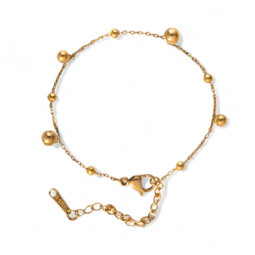
Gold Fine Chain Bead Bracelet 11138909
Fine gold-tone stainless steel chain bracelet dotted with polished beads of two sizes. Light and feminine.
Price €3.54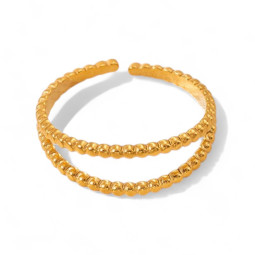
Gold Double Twisted Wire Ring 11324925-2
Slim open gold-tone stainless steel ring made of two parallel twisted bands, set slightly apart.
Price €2.52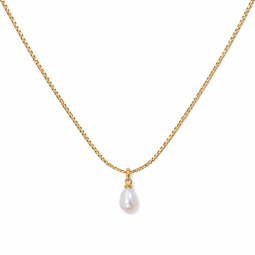
Gold-tone necklace with a pearlescent drop pendant 50980723
A small white pearlescent-look drop finishes this fine gold-tone stainless steel necklace with a lobster clasp and extension chain.
Price €4.68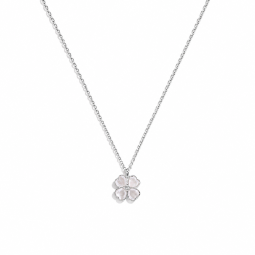
Silver-tone necklace with white four-leaf clover 33537003
Four white heart-shaped petals form a silver-tone edged clover on this fine stainless steel necklace, adjustable with an extension chain.
Price €3.84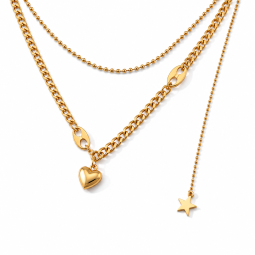
Gold-tone double-layer heart and star necklace 52305252
Two gold-tone chains, a smooth heart and a hanging star create this double-layer stainless steel necklace.
Price €5.28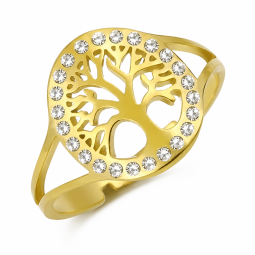

Gold Rhinestone Tree of Life Ring 41237768
Gold-tone stainless steel ring with a large openwork tree of life medallion framed by a ring of rhinestones. Symbolic.
Price €6.48
Leave a comment