
Why do customers hesitate to buy jewellery? 12 questions to answer
Find honest answers to 12 common jewellery questions about fit, materials, comfort, gifts, prices and delivery.
A customer looks at a necklace, compares it with another, asks a question and leaves without buying. That does not automatically mean the price is too high or that she dislikes the product. She may need a measurement, be unsure about a gift, not understand a finish or simply need time to think.
To help with that uncertainty, first look for the information she is missing. A precise answer is more helpful than repeating a sales point or offering a discount too soon. Here are twelve common questions about buying jewellery, with practical ways to respond and improve your presentation in store and online.
1. “Does this piece really suit my style?”
A customer may like a design without knowing how it fits into her usual wardrobe. Ask what she imagines wearing it with or when she might wear it. That gives you a more useful starting point than making a general statement about what would suit her.
Then offer a limited comparison. If she usually wears fine jewellery, show the piece she chose and a more subtle option. Explain what changes: width, pattern, movement or how noticeable it is around the face. Let her decide whether she wants to stay with her usual style or try something different.
Online, on-person photographs and a description of scale can help customers picture the piece. They must remain true to the product. Avoid claims that the same design is ideal for every outfit, age and occasion.
2. “How big is it in real life?”
A close-up photograph can make a piece look larger than it is. Conversely, an item photographed from a distance may seem very small. A customer may hesitate even when she likes the image. Give the available dimensions and say exactly what has been measured.
For a necklace, distinguish the chain, extender and pendant. For earrings, state the listed height or diameter. A bracelet measurement is not interpreted in quite the same way as a rigid bangle. If the product listing is unclear, check the measurement instead of offering an estimate as though it were certain.
In a shop, a measuring guide and mirror make comparison easier. Online, put the dimensions somewhere easy to find and show the item from several angles. You can answer this question before a customer needs to contact you.
3. “Will the ring fit me?”
The word “adjustable” does not mean that a ring fits every finger size. The band width, opening and decoration also affect comfort. Ask which finger the customer plans to wear it on and check what adjustment information is available.
Do not bend the ring sharply to demonstrate assumed flexibility. If no size range is documented, say so and offer a suitable try-on if your set-up allows it. An honest answer is better than promising a universal fit that may disappoint after purchase.
For a gift, uncertainty can be greater. Ask about the recipient's habits and explain the purchase terms that apply, without guaranteeing an exchange you have not checked. This gives the customer the information needed to choose.
4. “Will the earrings be comfortable?”
Comfort depends on several factors: weight, fastening, construction and the wearer's habits. Compact earrings are not automatically lightweight. A long drop may be hollow, while a small solid design may feel more noticeable on the earlobe.
Share the known details and ask what the customer usually finds uncomfortable. Does she often wear a headset? Do her glasses sit close to the fastening? Does she prefer fixed studs or moving designs? The answers help you make a relevant comparison.
Do not guarantee that the piece will feel the same to everyone. If its weight is not listed and this is an important factor, check the information. Showing how the fastening works can also resolve a question without suggesting an unsuitable shared try-on.
5. “What is the jewellery actually made of?”
Words used in product descriptions can be confusing: gold tone, silver tone, pearly, mother-of-pearl and shiny do not all tell you what a piece is made of. Separate the base material, finish and decorative elements. Use the information for the specific reference rather than a general claim about the whole collection.
For Saze Diffusion jewellery, the product listing is the starting point for this explanation. A gold-tone appearance does not prove that a piece is solid gold; a white decoration does not prove that it is natural mother-of-pearl. Do not add an unlisted process to make the product sound more appealing.
A customer who understands what she is buying can compare options more confidently. Use accessible language and answer the question she has asked, without turning the conversation into a technical lecture that distracts from what she needs.
6. “Is it suitable for my sensitivity?”
This question calls for care in a sales conversation. You can share documented information about materials and the parts that touch the skin. You cannot infer an individual's tolerance from the name of a metal alone or promise that there will be no reaction.
Ask what information the customer is looking for, without trying to assess an allergy yourself. If she knows she has a particular sensitivity, she can compare the available details with her own needs and, if necessary, seek advice from a qualified professional. Make uncertainty clear instead of replacing it with an unproven reassurance.
Prepare the team to respond consistently. Absolute claims may be easy to say but difficult to justify. Being precise about what is and is not known helps build a more reliable relationship.
7. “Will it keep its appearance?”
Customers often want to know how a piece will behave in everyday life. Answer using the available information about the material, finish and decorative elements. Avoid reducing the whole construction to a promise of unlimited durability.
Share care advice that suits the design and explain simple ways to store it. For more information, you can point customers to the guide to caring for stainless steel jewellery, while keeping any precautions specific to the product in mind.
An honest explanation does not necessarily make the item less appealing. It helps customers decide whether their habits suit the piece and avoids unrealistic expectations about knocks, friction or surface treatments.
8. “Why does this design cost this much?”
A question about price is not always a request for a discount. The customer may want to understand the difference between two references or check what is included. Start by identifying what she is comparing: size, construction, decoration, quantity or presentation.
Explain observable features without inventing superior quality, origin or manufacturing details. If you do not know the precise reason for a price difference, describe what you can verify. Price alone does not prove a material or a particular lifespan.
If budget is the real obstacle, offer an alternative with a clearly stated price. The customer may prefer one piece or another category. Respect that choice instead of presenting extra spending as insignificant.
9. “I want it as a gift. Is it the right choice?”
When buying a gift, a customer may not know the recipient's habits. Ask what clues she has: colours they often wear, a preference for subtle jewellery, categories they use or the occasion. These observations are more useful than a recommendation based only on age.
Compare two options and explain what to check. A ring requires attention to size; a necklace to length; earrings to the fastening and the recipient's habits. No design is a universal gift.
Also explain the presentation and the terms that apply. If a gift box costs extra, say so. The customer should understand the total price and the actual options available if one of the product's features is unsuitable.
10. “What if I change my mind?”
The answer depends on the sales channel, the country and the applicable terms. Do not automatically give the same answer for an in-store purchase, an online order and an off-premises sale. Also distinguish a change of mind from a request concerning a fault or lack of conformity.
In a shop, make sure the stated returns policy is clear and known to the whole team. Online, the information should be accessible before the order is placed. Do not invent a blanket exclusion for a category of jewellery without checking the exact legal terms.
When a customer asks, show her the relevant information instead of giving a vague response. She should be able to decide without having to interpret “probably” or “we'll see”, which may cause disagreement later.
11. “When will I receive my jewellery?”
This question matters when a birthday or event is approaching. Check current availability and delivery times. Do not reuse the timing from an old order as a guarantee for today. Distinguish preparation, dispatch and delivery when they are separate stages.
If you cannot guarantee a date, say so clearly. You can offer an item that is available or another option, but do not hide the uncertainty. A sale made with an unrealistic promise can lead to a complaint and undermine trust.
For collection in person, confirm the agreed place and time as well. An order does not end when the customer chooses a piece: she needs to know how she will receive it and whom to contact with a question.
12. “I'm choosing between several designs. How should I decide?”
At this point, adding still more references may make the decision harder. Return to the original need: everyday wear, a gift, a colour or a particular outfit. Keep two or three designs and compare them using the same criteria. The customer can then see what really sets them apart.
You might ask a simple question: “Which one can you picture wearing most easily with your clothes?” Then give her time to think. Repeating the same compliment about every option adds no useful information.
If she wants to think it over, give her the references she needs and let her leave without pressure. There is no problem to solve at all costs just because she has not bought immediately. Your advice may have done its job even if she decides later.
A four-step way to answer questions
First, listen to the whole question. Then sum up the need in a short sentence: the customer wants a measurement, information about the material or an option within her budget. Give a verifiable answer, or explain what still needs checking.
Finally, suggest a useful next step: look at another view, compare a measurement or try a different shape. This sequence helps you avoid replying too quickly with a sales pitch that does not address the real concern.
For instance, if a customer says, “This necklace looks short to me”, do not just tell her it is pretty. Give the available length, mention the extender and compare it with the fit she has in mind. If it does not suit her, show another option instead of trying to convince her that an unsuitable length will somehow work.
Turn questions into practical improvements
Over a set period, note recurring questions without collecting unnecessary personal details. Group them by product or theme. If several customers ask how large an earring is, improve the product listing or label. If the contents of a set are unclear, state the quantity before customers choose it.
This record lets you improve the presentation instead of asking staff to repeat the same answers. It may also show that a photograph is missing, a price is poorly placed or delivery information is hard to find.
Review the results without assuming an automatic effect
After making a change, compare questions and purchases across similar periods. Take footfall, promotions and changes to the collection into account. An improvement may reduce confusion without immediately creating a visible rise in sales.
The aim is to make the choice clearer. A customer who understands that a product does not meet her needs may decide against it, avoiding a possible disappointment. Good advice is also measured by how closely the expectation created matches the product received.
Frequently asked questions for jewellery sellers
Should I offer a discount as soon as a customer hesitates?
No. First find out what is causing the hesitation. A discount will not solve an unknown size, an unsuitable fastening or an uncertain delivery date. If price really is the obstacle, another reference within budget may be more helpful.
How should I respond when information is missing?
Say exactly what you will check and do not present a guess as a fact. Make a note of the reference so you can get the right answer. If the purchase depends on that detail, let the customer wait rather than asking her to order based on an uncertain promise.
How many designs should I show?
Start with a small selection that meets the stated need. Two or three options often make for a clear comparison. Add more only if the customer wants to explore or none of the suggestions fits. The useful number depends on the conversation, not a fixed target for products to present.
How can I avoid sounding pushy?
Ask before offering an alternative, answer the question and accept a refusal without repeatedly following up. A specific point about the product is more useful than a string of sales arguments. Leave pauses so the customer can look and decide.
Help customers choose with reliable information
Hesitation often reveals a need for more precise information. Dimensions, materials, comfort, price, gifting or delivery: each question calls for a suitable answer. By preparing these details and respecting the customer's pace, you make the buying experience clearer and more consistent.
To build your selection, browse Saze Diffusion jewellery and keep the product details for the references you offer. You can then turn recurring questions into better descriptions, clearer displays and genuinely useful advice.
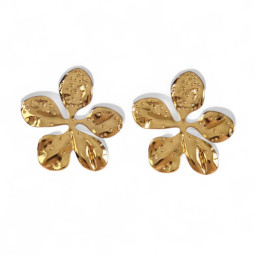
Gold Hammered Flower Earrings 11287782-14
Large gold-tone stainless steel flower earrings, five rounded petals with a hammered relief. Sunny, generous and artisan.
Price €1.92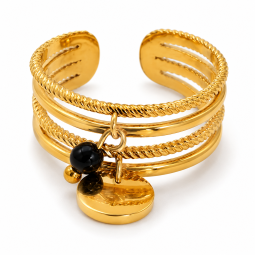
Gold Multi-Row Ring Black Charms 42144266
Open gold-tone stainless steel ring with four smooth and twisted rows and charms: black beads and a disc. Boho chic.
Price €8.16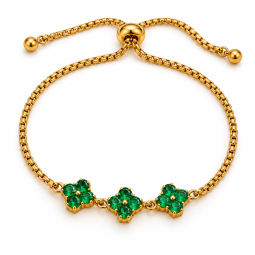
Gold-tone slider bracelet with three green flowers 54934092
Gold-tone stainless steel bracelet with three green flowers centred on a fine chain and a two-strand sliding adjustment.
Price €8.40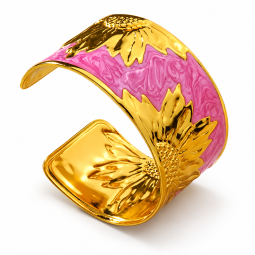
Pink Enamel Sunflower Cuff 54101528
Open cuff in gold-tone stainless steel: large raised sunflowers on marbled pink enamel. Romantic and radiant.
Price €5.64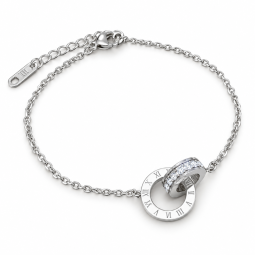

Silver Roman Numeral Ring Bracelet 32151141
Fine silver-tone stainless steel bracelet: two interlocked rings, one with Roman numerals, the other set with rhinestones. Discreet and symbolic.
Price €5.88
Leave a comment