
How to add jewellery to a clothing boutique
Help customers picture a complete outfit by pairing the clothes in your boutique with a small, well-chosen selection of jewellery.
A customer tries on a shirt, likes its shape and is still wondering how to wear it. A well-chosen necklace can help her picture a complete outfit. In a clothing boutique, jewellery belongs when it extends that experience: it makes a combination tangible, gives a garment a different feel and lets the customer personalise a look.
Adding jewellery to your range takes more than putting a display beside the till. You need to choose designs that work with the clothes, make them easy to discover and give the team a natural way to suggest them. Here is a practical approach to creating combinations customers can use, tracking the results and refreshing your selection without making the shop feel crowded.
Start with the clothes your customers actually buy
Before ordering jewellery, look at your main categories: shirts, dresses, knitwear, jackets or occasionwear. Note the colours and necklines that appear in your sales. A jewellery range becomes more relevant when it complements these real uses instead of an abstract image of your boutique.
Notice when customers ask for advice, too. Some are looking for workwear, others want to dress up a simple dress or put together an easy weekend outfit. These requests show you what a piece of jewellery can do: add a subtle finishing touch, create a focal point or bring two parts of an outfit together.
Identify three starting points
Choose three representative garments and build a combination around each. For example, use a plain shirt for everyday wear, a simple dress for an evening out and knitwear for a relaxed outfit. Your exact choices will depend on your stock, but this limit helps you avoid buying more pieces without a clear direction.
For each situation, describe the effect you want in one sentence. “Add a detail near the face” is more useful than “offer pretty accessories”. That purpose will help you choose the right scale, colour and type of jewellery.
Put together a coherent first selection
A clothing boutique does not necessarily need a range as broad as a specialist jewellery shop. Start with references that work with several outfits in your collection. A versatile piece can be shown with a jacket and a blouse, while a highly decorative design might be reserved for one particular look.
The Saze Diffusion catalogue lets you compare different jewellery categories. When making your selection, check the stated material, measurements and fastenings, then picture the garments you would show with each reference. If you cannot identify a clear use for it in your shop, postpone that purchase.
Balance subtle pieces with more character
Include understated designs for customers who want to complement an outfit without changing their usual style, alongside a few more noticeable pieces for those who want a stronger accent. Both have a role. A selection made entirely of statement jewellery may impress without being easy to wear; a uniform range may offer too little to compare.
There is no universal ratio of subtle to striking jewellery. Test your assortment with customers and keep a record of requests. The right balance depends on the style of your clothes, the price of complete outfits and your customers' habits.
Choose colours to complement your collection
Gold tone and silver tone can each work with many outfits. Look at the buttons, zips, belt buckles and accessories you already stock. Repeating a tone can help pull a look together, but a deliberate mix can work too. Staff should be able to present both options without turning them into rigid rules.
For coloured details, begin with a few shades already found in your clothes. A green piece might complement a printed dress that includes the same shade, while a plain finish can leave more room for the pattern. The aim is to make choices understandable, not to offer every possible colour.
Create looks customers can recreate
A plain shirt and a necklace
Show the necklace with the number of buttons the customer would actually want to leave open. Check where the pendant falls and how much space there is. A chain that looks well placed on a mannequin may sit differently on someone; keep measurements and any extender details to hand.
Then offer an alternative: a more discreet necklace or a pair of earrings instead. This comparison shows that the accessory is optional. It also helps a customer who likes the shirt but does not want to wear jewellery around her neck.
A simple dress and earrings
With a plain dress, earrings can become the main detail near the face. Compare a compact shape with a more movement-friendly design. Look at the effect with the customer's hairstyle and, where relevant, her glasses. Do not add a necklace straight away; give her time to see the outfit as it is before suggesting another piece.
This approach shows two ways to wear the same dress. A subtle pair may suit a daytime occasion, while another gives the outfit a more dressed-up feel. Describe the visual difference without promising that one style will automatically suit every occasion.
Knitwear and jewellery that stays visible
Thick knitwear can hide a fine bracelet or catch on certain decorative details. Check the sleeves and texture before putting the look together. Visible earrings or a ring may be easier to show than several pieces layered around the neckline and wrists.
If you suggest a necklace over the garment, check its length and whether it catches. Try it on a display sample. An accessory should complement the garment without making it awkward to wear or needing constant adjustment.
A structured jacket and a metal detail
A jacket with prominent buttons may work with jewellery that repeats a tone or line. A simple ring or small earrings may be enough. If the customer prefers a bolder piece, compare it with the jacket both fastened and open.
Consider the whole silhouette. A piece that looks appealing on the counter may have a different effect next to a lapel, collar and other accessories. Invite the customer to look at the outfit in a mirror from a natural distance.
Display jewellery near the clothes it complements
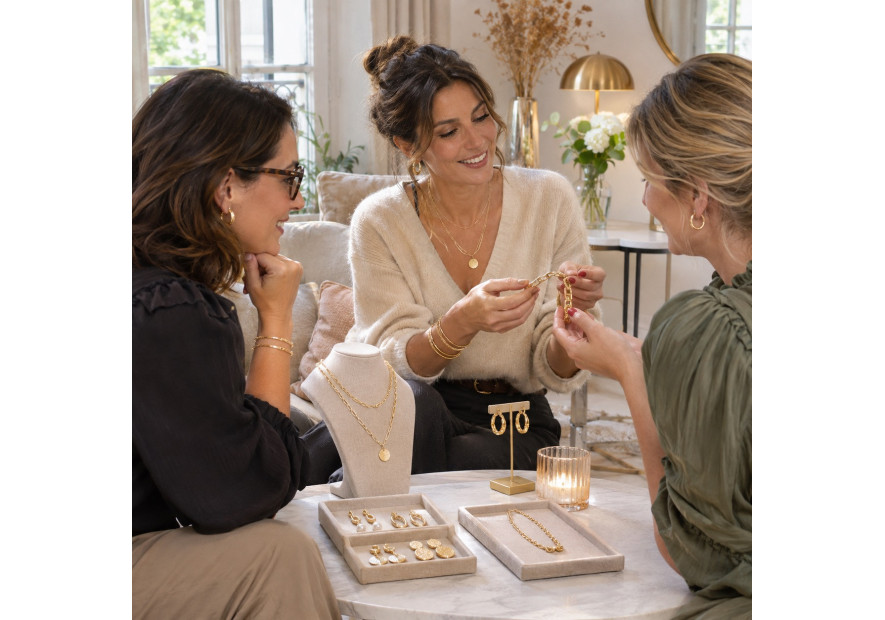
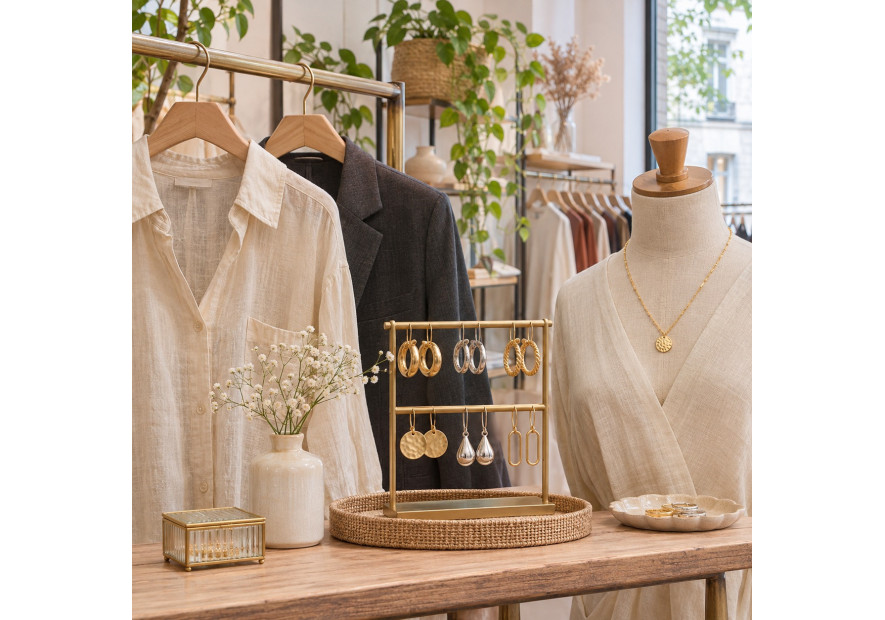
You can keep a central area for comparing designs and show a few outfit combinations near the relevant garments. This connects inspiration with choice. A customer sees an example of a look and can then find its variations in a clearly marked area.
Avoid spreading references throughout the shop. Staff should be able to find an item quickly, check its price and keep track of stock. A small number of combinations, refreshed regularly, is often easier to maintain than jewellery on every rail.
Make each outfit's contents clear
When a mannequin wears several items, show each price separately and state exactly what is included. Jewellery must not appear to be included in the price of a garment if it is not. A small board or outfit card can list each reference and the total cost of the look.
If you offer a combined deal, state its terms and the references it covers. The team should give every customer the same information. A promotion improvised during a fitting can lead to inconsistent offers that are difficult to explain and track.
Suggest jewellery as part of the fitting, naturally
Jewellery is easier to suggest when it responds to a question or intention the customer has expressed. Someone who wants to make an outfit feel more dressed up may welcome a comparison. A person in a hurry to find a particular size may not be keen to explore a new category.
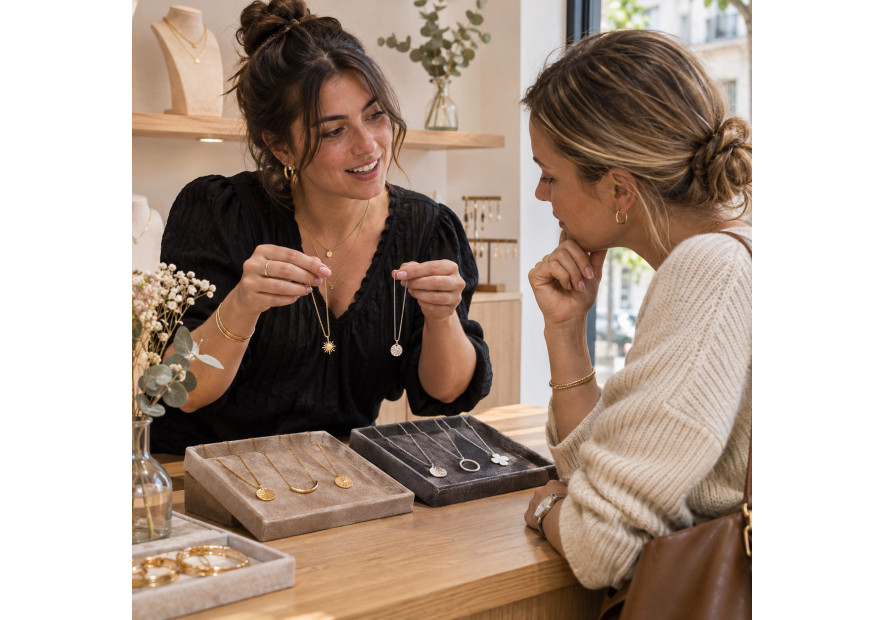
Start by asking if they would like to see a combination. If they say yes, offer one or two pieces and explain how they work with the outfit. “This design picks up the line of the buttons” gives a concrete reason. A vague phrase such as “you absolutely need this necklace” does not help them decide.
Train the team on the useful product details
Prepare a short card for each reference or jewellery category. It can bring together the material, measurements, fastening and any available care guidance. The purpose is to support reliable answers, not to make every staff member deliver the same sales script.
Agree on what staff must not make up, too. A stainless steel description is not enough to promise universal tolerance, absolute durability or a particular finish. A sales assistant should be able to say she will check a detail instead of filling gaps in the product information with a guess.
Respect the customer's choice
If she prefers to buy the garment on its own, complete the sale as usual. A complementary suggestion should improve the advice, not make the main purchase uncomfortable. A customer who is happy with her choice may come back to discover the jewellery in a different context.
Do not use the price of the garment to make the jewellery seem cheap, either. The customer's budget is her own. State the price of each option and let her decide between another item, a different category or no addition.
Create useful outfit cards and content
Photograph your combinations against a consistent background and include the exact references. A card can show the garment, the suggested jewellery and one alternative. Add a short note about the choice of shape or colour so the team can reuse the idea in the shop.
Check that the products are available before publishing a look. If an item is no longer offered, update the content or make the situation clear. An image that directs customers to an unavailable outfit can be frustrating, particularly if you have no similar alternative in mind.
Use one garment to show several possibilities
A series of three combinations around the same dress is often more informative than unrelated outfits. It shows what the jewellery actually changes: a focal point, movement or a repeated colour. You can use the same idea in a window display, on a card and in your posts.
Keep scale and colour true to life in your photographs. Heavy retouching can make jewellery look larger or brighter than it is. Your content should help customers recognise the products when they visit the shop.
Track how the combinations perform
To measure interest in the new range, distinguish jewellery-only purchases from purchases made alongside clothing. Record the categories involved and the period you are observing. This helps identify combinations that are actually working, without attributing every change in average basket value to the presence of jewellery.
Track units sold by reference and requests you could not fulfil. A pair that is often suggested but rarely chosen may be poorly matched, too prominent or simply less suitable for your customers. Before removing it, try showing it with another outfit or in a different way.
Compare similar periods and situations
A busy week is not directly comparable with a quiet one unless you account for the context. Look at results across several days and record changes to the collection, displays or team. Tracking does not need to be complicated to be useful.
You can start with a table containing the date, garment, jewellery suggested and outcome. Add a short note when the same objection comes up. Avoid collecting unnecessary personal information: what matters here is purchasing behaviour and product characteristics.
Refresh the range without losing the boutique's identity
When the clothes change, review the combinations instead of automatically replacing every piece of jewellery. Some references may work with a new colour or cut. Others may lose their appeal when the garment that showed them off is no longer available.
Keep a few familiar options and introduce new pieces that relate to your collection. This continuity helps customers recognise your style. It also makes things easier for staff, who can use what they already know while gradually learning about new designs.
Frequently asked questions
Do I need a large jewellery area in a clothing boutique?
Not necessarily. A small but identifiable area can be enough to start. The important thing is to let customers compare pieces, see prices and find references. Adjust its size as you learn from sales and requests, without disrupting the flow of the shop.
Which jewellery should I choose first?
Start with your most representative clothes and the requests customers make. Choose references whose dimensions and uses you understand. A necklace, pair of earrings or bracelet should have a clear role in the combinations you present, rather than being chosen only because it looks appealing in a photograph.
Should I always offer a complete matching set?
No. One piece may be enough to complete the outfit. Show a set when the customer wants one or when the pieces have an interesting visual connection. They should be able to buy each item to suit their needs, unless the offer is explicitly sold as a set.
How can I stop jewellery distracting from the clothes?
Keep the number of displayed combinations limited and the comparison area organised. On a mannequin, decide which element should be most prominent. Jewellery can support the garment's presentation without always becoming the main feature.
How do I know whether it is worth developing this new range?
Review sales, costs, time spent and customer responses over a sufficient period. Check how easy it is to restock and whether the team can keep the display in good order. A decision based on these factors is more reliable than one based on a single day.
Make jewellery an extension of your clothing advice
A jewellery range belongs in a clothing boutique when it helps customers picture how to wear their clothes. Start with your collections, create a few clear looks and suggest accessories with practical explanations. The aim is to offer a fuller shopping experience, whether or not the customer chooses an extra piece.
Explore Saze Diffusion jewellery as you prepare your first combinations. Compare the references with the clothes already in your shop, then adjust your range in response to the uses and sales you observe.
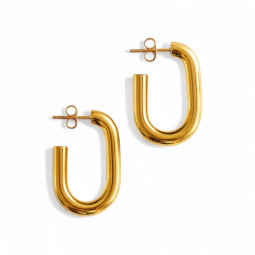
Gold Chunky Oval Half Hoop Earrings 10969603-2
Gold-tone stainless steel half hoops in an elongated oval shape, with a thick, smooth tube. A strong, timeless piece.
Price €2.40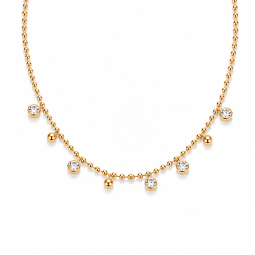
Gold-tone textured-chain necklace with small round drops 41395284
A chain with little gold-tone raised details carries smooth and clear sparkling round drops. Stainless steel necklace with a 39 cm chain and extension.
Price €8.16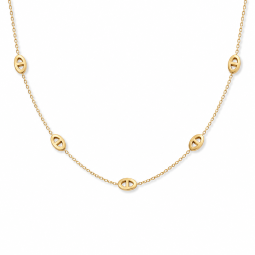
Gold-tone necklace with five spaced marine links 32946652
Five gold-tone marine links interrupt a fine 39 cm stainless steel chain, creating an open necklace with a 5 cm extension.
Price €7.56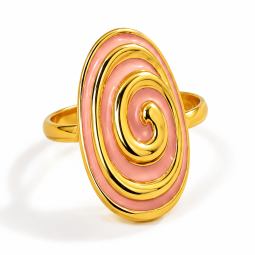
Gold Pink Enamel Spiral Ring 52506520
Adjustable gold-tone stainless steel ring with a large elongated oval where a raised gold ribbon coils into a spiral over salmon-pink enamel.
Price €4.68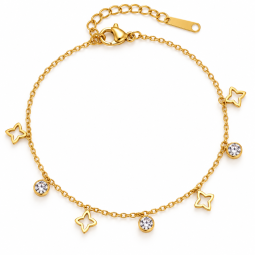
Open star and round rhinestone gold-tone bracelet 52127177
Open four-point stars and clear round rhinestones hang from this gold-tone stainless steel bracelet with an adjustable chain fastening.
Price €4.44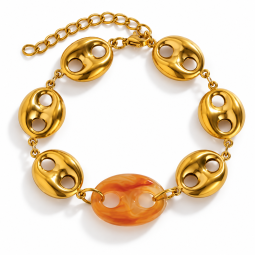

Coffee-bean link bracelet with a marbled orange centre 54708800
A marbled orange centre brightens broad gold-tone coffee-bean links on a stainless steel bracelet with lobster clasp and extension.
Price €6.48
Leave a comment